Lorem ipsum dolor sit amet, cum id iusto vocent. Laoreet admodum per te, te mel iudicabit adversarium. Ei nec illum omnes nostro, enim assentior in eos. Nominavi verterem at quo, suas cibo liberavisse eu vel, nam in erant semper molestie. Ne nominavi vulputate dissentias eos, nec no elitr deserunt vituperata. Ex brute copiosae nec, ei tamquam argumentum duo. Exerci tincidunt has ad, ad vel vidisse oportere adolescens. Ne vim consul fabellas, debet omittam ne his. Soleat aliquando vim an.
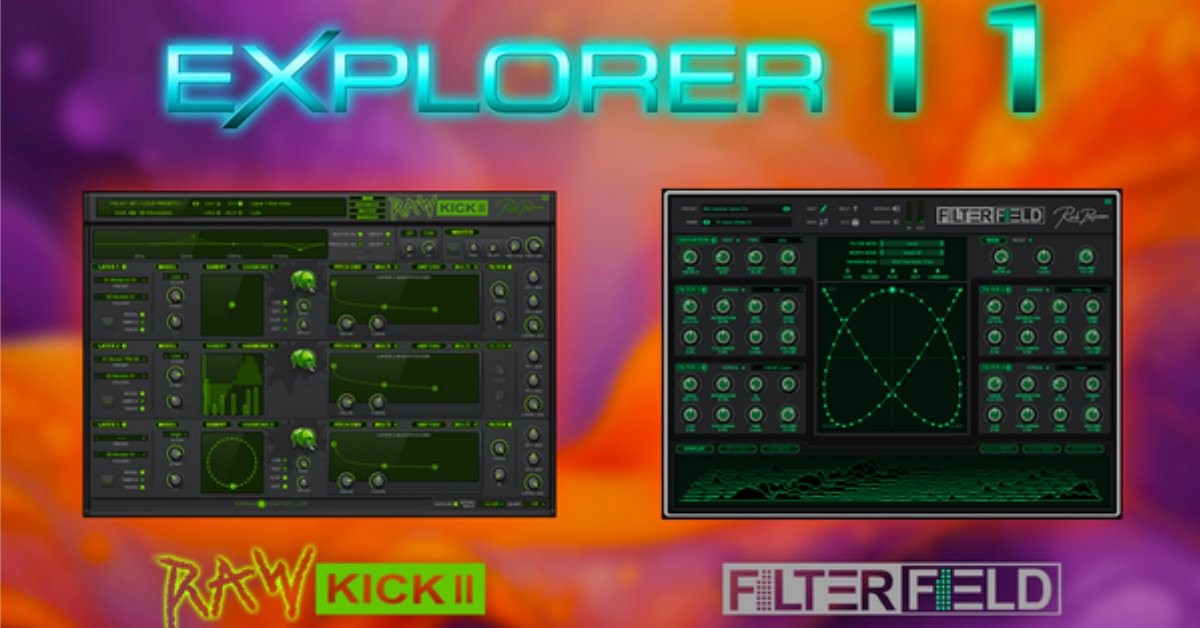
 ECHT, THE NETHERLANDS: virtual instrument and effect developer Rob Papen Inspiration Soundware is proud to pull out the virtual stops by announcing availability of eXplorer-11 as the latest edition of its inspirational bundle — bursting at the seams with 36 plug-ins (plus an option to add 11 legacy products), augmented with the addition of RAW-Kick 2 as a three-layer powerhouse kick drum synthesizer and FilterField as an exciting new morphing filter effect, as well as new presets for its popular Predator-3 hybrid synthesizer, Punch-2 drum machine, and WirePluck pluck sounds-specialising synthesizer — as of May 7…
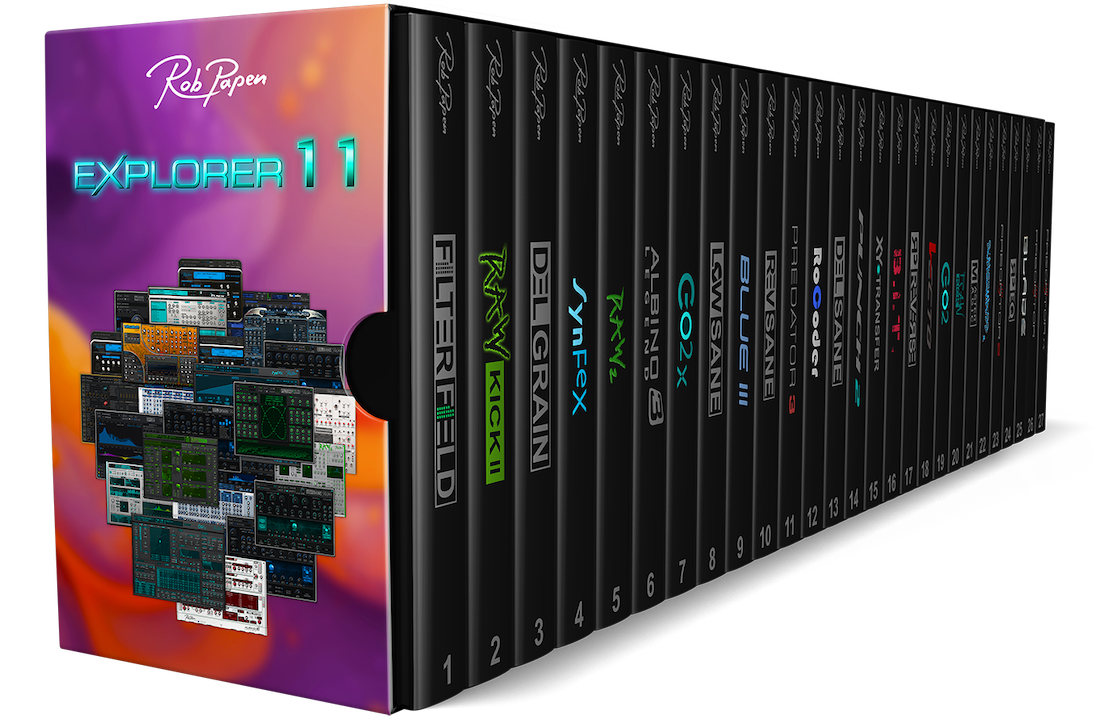
As an acclaimed virtual instrument and effect developer that has been at the top of its game for over 20 years with self-confessed synth freak and world-renowned sound designer Rob Papen always at its creative helm, is it any wonder that the latest edition of its inspiration bundle has now reached the lofty heights of eXplorer-11? Encompassing no fewer than 36 plug-ins in the process of doing so, its two new additions are worthy inclusions in the ever-expanding Rob Papen Inspiration Soundware pantheon.
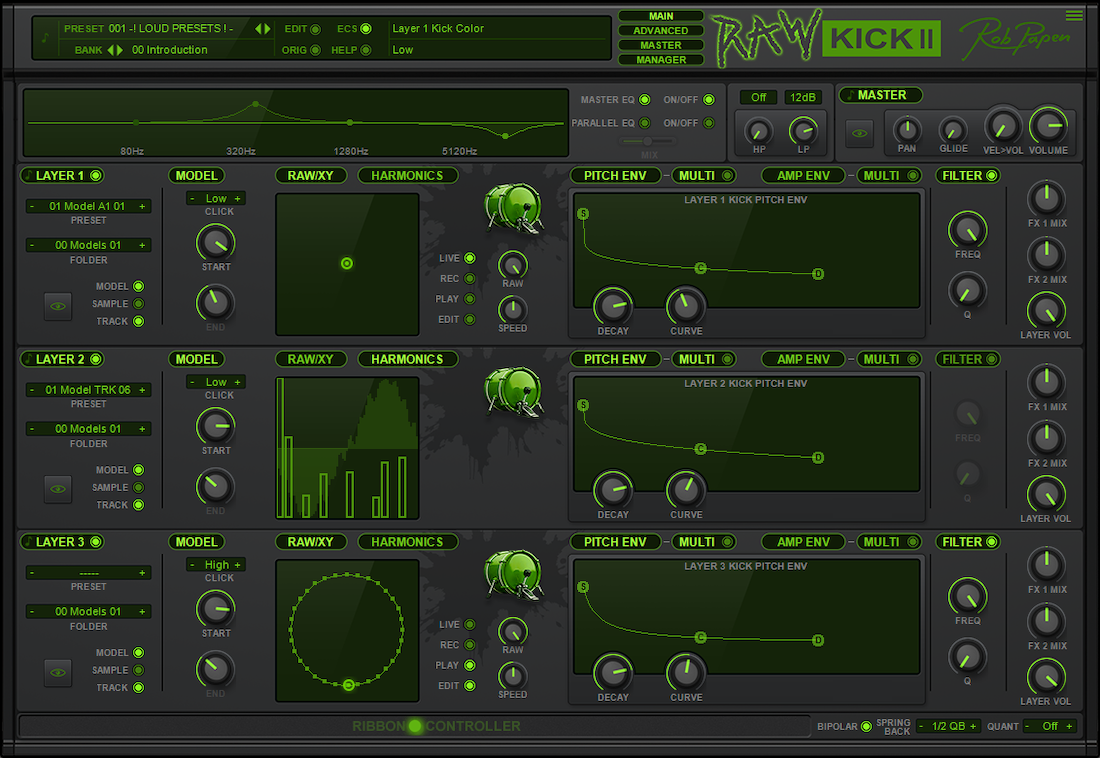
Presented to the music-making masses as a three-layer powerhouse kick drum synthesizer, RAW-Kick 2 is the worthy successor to a unique Rob Papen product originally developed in close collaboration with Dutch Hardcore and Hardstyle producers back in 2018. That said, its versatile concept can be applied to all contemporary genres like DnB (Drum and Bass), EDM (Electronic Dance Music), Hip-Hop, and House, to name but a few notables. New to RAW-Kick 2 is its MAIN page, permitting users to creatively combine LAYER 1, LAYER 2, and LAYER 3 using an abundance of layer presets provided by respected producers in various music styles to create their desired kick sound, and apply speedy changes to any sound by allowing access to the most important parameters. It is also possible to select a dedicated kick synthesizer MODEL in each layer or use a SAMPLE-based layer of factory-installed samples (with the option to load samples in WAV or AIFF formats) — where a GRANULAR mode also offers unique modulation options to dynamically change the ‘length’ and ‘size’ of the grains — within the MAIN page. Putting some meat onto the bone, the kick synthesizer MODEL is an oscillator with HARMONICS waveform drawing options; RAW-derived distortion with XY control and recordable movement — regular Rob Papen product users will, without doubt, delight in recognizing the now-included RIBBON CONTROLLER with the unique tempo-based SPRING BACK feature facilitating dynamic changes to the sound; 48 FILTER modes; pre-filter distortion; FX 1 and FX 2 with 25 distortion types and 17 general effects; pre-EQ (placed ahead of FX 1 with four bands, plus HP and LP filters); post-EQ (placed after FX 2 with four bands, plus HP and LP filters); and LFO (Low Frequency Oscillator) with various waveforms, to begin to dig deeper. And anyone wishing to dive deeper can activate an ADVANCED page, proffering all manner of in-depth editing features such as MULTI-stage envelopes for pitch (PITCH ENV) and volume (AMP ENV). Final finishing touches are available via the MASTER page — perfect kick creation dreams becoming reality with what is, quite possibly, the most powerful kick drum synthesizer on the planet! Promises Rob Papen: “This kick drum powerhouse is unsurpassed in its features, making it suitable for any music production; whether you’re seeking a standard kick drum or something else entirely, it will deliver.”
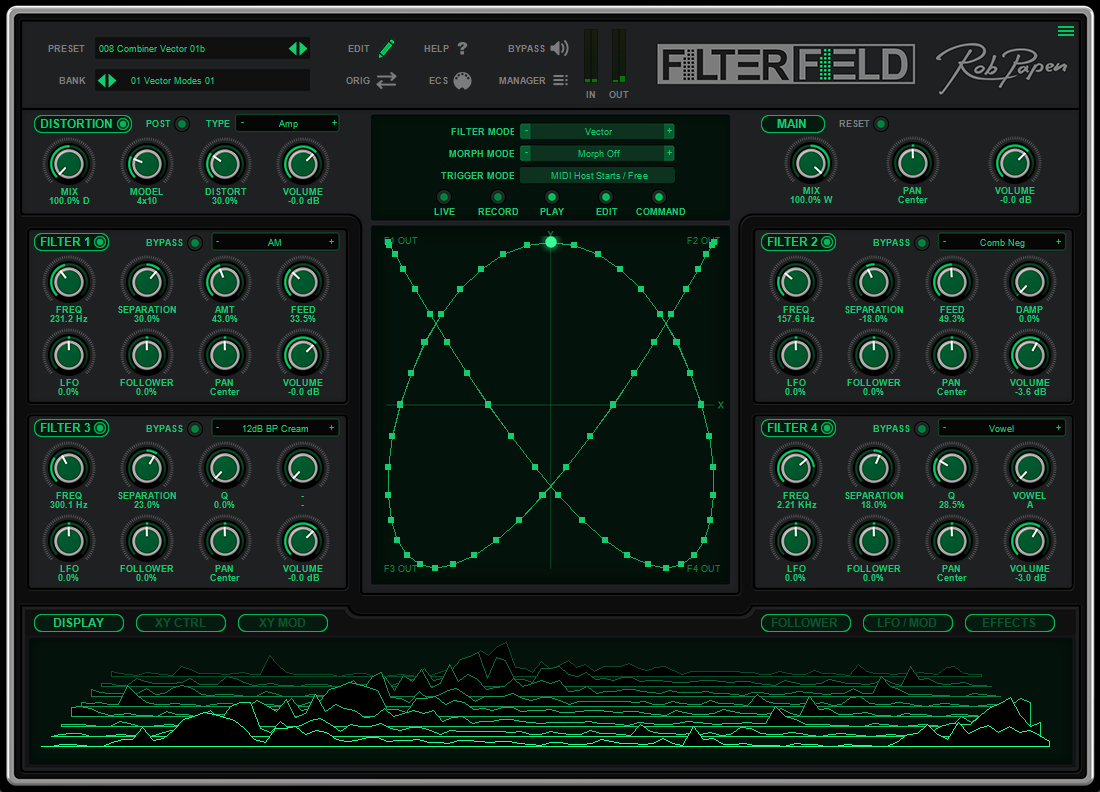
Plug-in additions to eXplorer-11 creatively continue with FilterField, forging ahead as an exciting new morphing filter effect encompassing the XY field featured in other Rob Papen products, this time pressed into action to create new and exciting filter effects, working with no fewer than 32 analogue-modelled filters — including all-pass, comb, EQ, and phaser options, as well as a range of more specialised affairs like LP/HP/BP feedback and LP/HP/BP frequency modulated filters, frequency shift, and amplitude and ring modulation. And as if all that was not enough to be getting on with, a dedicated DISTORTION module is also included, with 21 distortion types and an option for pre- or post-filter operation on offer. The top-tier filters can all be combined in the XY Vector FILTER MODE, moving from one filter type to another, with an option to simultaneously Morph a range of parameters. Parallel and serial modes for the FILTER 1, FILTER 2, FILTER 3, and FILTER 4 modules are also available, while the XY movement can be recorded and played back in various tempo-based ways to positively put FilterField in a league of its own. An audio follower can respond to the input or one of the many other options available for creating, for example, side-chain control, with each filter module having its own FOLLOWER amount control. Likewise, LFO control is also available individually to each filter module, as well as two free LFOs with various waveforms and tempo-sync options. Above and beyond that, the modulation matrix has eight slots for additional modulation by FilterField itself or MIDI (Musical Instrument Digital Interface) sources. Reflects Rob Papen, admittedly economic in the carefully chosen words of an effective endgame: “Enjoy FilterField.”
Looks like spring has truly sprung over at Rob Papen, then, thanks, in no small part, to the availability of eXplorer-11 as the latest edition of its inspirational bundle, bringing with it a welcomed wellspring of plug-ins — both new and established entries alike — and, quite literally, tens of thousands of sounds set to enhance the enjoyment of even the most seasoned of music-makers wishing to do best by their creations.
eXplorer-11 is available — as an all-encompassing 36-product inspirational bundle of 64-bit AAX-, AU-, VST-, and VST3-compatible virtual instrument and effect plug-ins for Mac (macOS 10.15 or higher, ARM processor compatible) and 64-bit VST- and VST3-compatible virtual instrument and effect plug-ins for PC (Windows 7 or higher) with 64-bit AAX compatibility available for PT 12 or higher (PC) — at a consumer price of €499.00 EUR/$499.00 USD from authorised Rob Papen dealers worldwide or as a download directly from Rob Papen for those same prices via its dedicated webpage, which also includes more in-depth information, here: https://www.robpapen.com/explorer-11.html
Owners of eXplorer-10 can upgrade to eXplorer-11 for €74.00 EUR/$74.00 USD, owners of eXplorer-6 through to eXplorer-9 can upgrade to eXplorer-10 for €99.00 EUR/$99.00 USD, and owners of eXplorer-1 through to eXplorer-5 can upgrade to eXplorer-11 for €149.00 EUR/$149.00 USD, while the powerful PRISMA plug-in — allowing users to combine and layer up to four virtual instruments in various creative ways — is available to owners of any Rob Papen product for free from here: https://www.robpapen.com/prisma.html (Owners of one or more Rob Papen products are also entitled to discounted eXplorer-11 upgrade pricing, ranging from €99.00 EUR/$99.00 USD through to €299.00 EUR/$299.00 USD.)
RAW-Kick 2 is available — as a 64-bit AAX-, AU-, VST-, and VST3-compatible virtual instrument plug-in for Mac (macOS 10.15 or higher, ARM processor compatible) and as a 64-bit VST- and VST3-compatible virtual instrument plug-in for PC (Windows 7 or higher) with 64-bit AAX compatibility available for PT 12 or higher (PC) — for individual purchase at a consumer price of €79.00 EUR/$79.00 USD from authorised Rob Papen dealers worldwide or as a download directly from Rob Papen for those same prices via its dedicated webpage, which also includes more in-depth information, here: https://www.robpapen.com/raw-kick-2.html (Owners of RAW-Kick can upgrade to RAW-Kick 2 for €39.00 EUR/$39.00 USD.)
Watch Rob Papen’s inspirational introductory RAW-Kick 2 video — featuring a voice-over from Rob Papen himself — here:
FilterField is available — as a 64-bit AAX-, AU-, VST-, and VST3-compatible virtual effect plug-in for Mac (macOS 10.15 or higher, ARM processor compatible) and as a 64-bit VST- and VST3-compatible virtual effect plug-in for PC (Windows 7 or higher) with 64-bit AAX compatibility available for PT 12 or higher (PC) — for individual purchase at a consumer price of €49.00 EUR/$49.00 USD from authorised Rob Papen dealers worldwide or as a download directly from Rob Papen for those same prices via its dedicated webpage, which also includes more in-depth information, here: https://www.robpapen.com/filterfield.html
Watch Rob Papen’s informative introductory FilterField video — also featuring a voice-over from Rob Papen himself — here:
About Rob Papen (www.robpapen.com)
Self-confessed synth freak and world-renowned sound designer Rob Papen started working with synthesizers at the tender age of 15 when purchasing an analogue Korg MS-20 semi-modular monosynth and accompanying analogue SQ-10 sequencer. Suitably inspired, he subsequently released several albums as part of Dutch electronic music groups Peru and Nova — the latter featuring the same members as Peru, but with a more commercial slant — with whom he enjoyed number one hit singles in The Netherlands (Nova) in 1982 and Austria (Peru) in 1988. Though Peru disbanded in 1993, Rob Papen had already established himself as a sought-after sound designer, creating presets for the likes of Access, E-mu, Ensoniq, and Waldorf, subsequently founding his namesake company in pursuit of creating a sound designer’s dream synth. Since that software dream became reality — starting in 2005 with BLUE as an exciting-sounding, self-styled ‘Crossfusion Synthesis’ affair (combining FM, Phase Distortion, Wave Shaping, and Subtractive synthesis into one powerful dream synth) upon forming the RPCX (Rob Papen ConcreteFX) partnership with music software developer Jon Ayres to develop new Rob Papen-branded virtual instrument and effect plug-ins, today Rob Papen’s products define cutting-edge contemporary music production: powerful virtual instrument and effect plug-ins that intermix innovative design, uncompromising sound quality, and musical-plus-production-grade presets to make tracks truly shine, whatever the genre… Inspiration Soundware, indeed!
© 2026 Rob Papen Inspiration Software
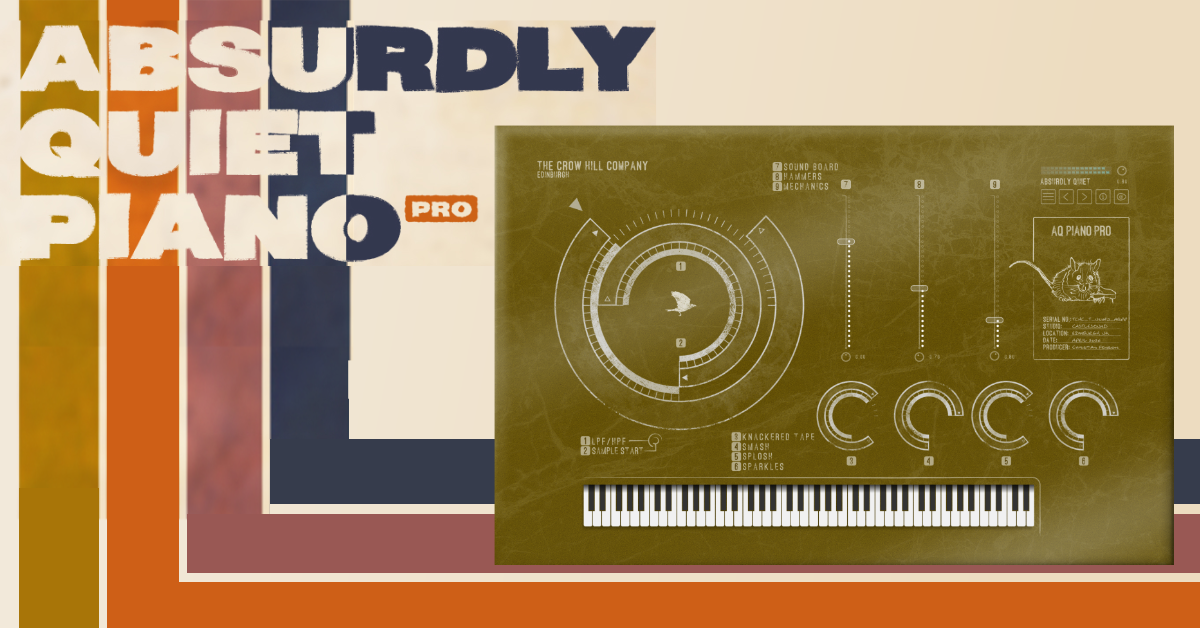
 EDINBURGH, UK: following in the foundational footsteps of the recently released VAULTS – ABSURDLY QUIET PIANO, cunningly creating the seemingly impossible sensation of playing a grand piano impossibly quietly as the latest downloadable drop in the Edinburgh-based enterprise’s free virtual instrument collection, The Crow Hill Company is proud to announce availability of ABSURDLY QUIET PIANO PRO — produced beyond the possibilities afforded in live performance on the very verge of silence as a mellow, soft, and alluring piano that hits all the right (sampled) notes without having its resonance hindered by being based on a felt or celeste-pedal piano — as of May 20…
It is fair to say that The Crow Hill Company has, quite literally, gone ‘pro’ after scoring a hit with its insanely popular VAULTS – ABSURDLY QUIET PIANO release — recorded during the dead of night in company founder and media composer Christian Henson’s front room, sampling a grand piano at the quietest dynamic possible to create a beguiling effect that is impossible to recreate when playing piano in a regular fashion — by creating an even quieter, more intimate version, this time recorded at Castlesound Studios, situated in beautiful countryside just 20 minutes from Edinburgh as one of the leading recording studios in the UK, with a much chunkier spec sheet including dynamic layers, a brace of round robins, pedal up and down samples, release triggers, and more. Maintains Christian Henson himself, setting the scene for its inventive introduction that is, in itself, surely set to inspire: “It is designed for intimacy, but doesn’t have the ‘thonk’ of a felt piano — that sound that I’ve got very tired of, and is part of my ORIGINS range, building my sample palette up from scratch. I’m hoping that ABSURDLY QUIET PIANO PRO is going to be my workhorse.”
With ABSURDLY QUIET PIANO PRO, The Crow Hill Company is intent on taking things to the next level — as evidenced by that ‘pro’ addendum. After all, VAULTS – ABSURDLY QUIET PIANO is effectively an ‘R&D’ version of its turned-professional, full-blown followup, arising from the fact that the Edinburgh-based enterprise had been carrying out a bunch of research and development surrounding pianos at the time — albeit, admittedly, distracting itself with a simple question: how quietly can you actually play a piano? In itself, this begs the followup question of how does the ‘pro’ version differ from its ‘R&D’ predecessor? An answer is anchored around ABSURDLY QUIET PIANO PRO’s introduction of both pedal up and down resonance samples — think two (super-soft and almost-silent-soft) dynamic layers, a brace of round robins, release triggers, damper samples, and two distinctive mic positions to balance resonance with the mechanics of the instrument. And all recorded at Castlesound Studios with top-tier microphones and super-quiet mic preamps, achieving hitherto-thought-impossible tones by playing the piano at an absurd level of quietness not possible in live performance. Clarifies Christian Henson: “We released VAULTS – ABSURDLY QUIET PIANO about three weeks ago, and our site is still so overwhelmed that it thinks it’s having a denial of service attack! It was a hastily done bit of R&D — the lid was down, it was a pair of tiny DPA mics, so it had a kind of muffled quality. What’s more, it was so quiet that the setting — being my front room — was so unprofessional that the noise reduction required to make it useable rubbed out all of the character. I wanted that sound that you get — when you’re playing so quietly — of the hammer actually kissing the string. So we went into Castlesound, and we made ABSURDLY QUIET PIANO PRO, but little did I know that I was entering into a noise reduction nightmare!”
Creatively, Christian Henson found the exact point at which the key produced a tone for each and every note. Needless to say, every note and every round robin became a game of searching, finding, and ushering out something beyond just a quiet thud. This, however, created a problem in that the notes were whisper quiet, meaning managing even the slightest movement in the room resulted in a somewhat rigid, ache-and-pain-inducing week in Edinburgh’s esteemed Castlesound Studios. Saying that, even with the quietest microphones and preamps, the noise floor was always going to prove problematic, as the nightmarish level of noise reduction required meant that the subtle, bright harmonic characteristics of the piano were lost; all was not lost, though, as a solution was found during the post-production process — painfully time consuming as it was — that involved going into each and every one of the 2,000 samples recorded and meticulously etching out every harmonic from the ‘shash’ that surrounded it. “It has a pianoforte element to it that belies the quietness at which I recorded this thing,” continues Christian Henson, adding: “Also, it’s an Estonia, which is a relatively modern piano that has a very modern action; when you play it quieter there’s a load of resonance and warmth because it’s new and young, so, because of the characterful nature of the sampling, we did a bunch of round robins. We recorded it two different ways; it’s got release triggers that give it that real intimate sound — fully controllable; and the damper pedal has a beautiful, shimmering noise to it, alongside some really good functionality on the front end.”
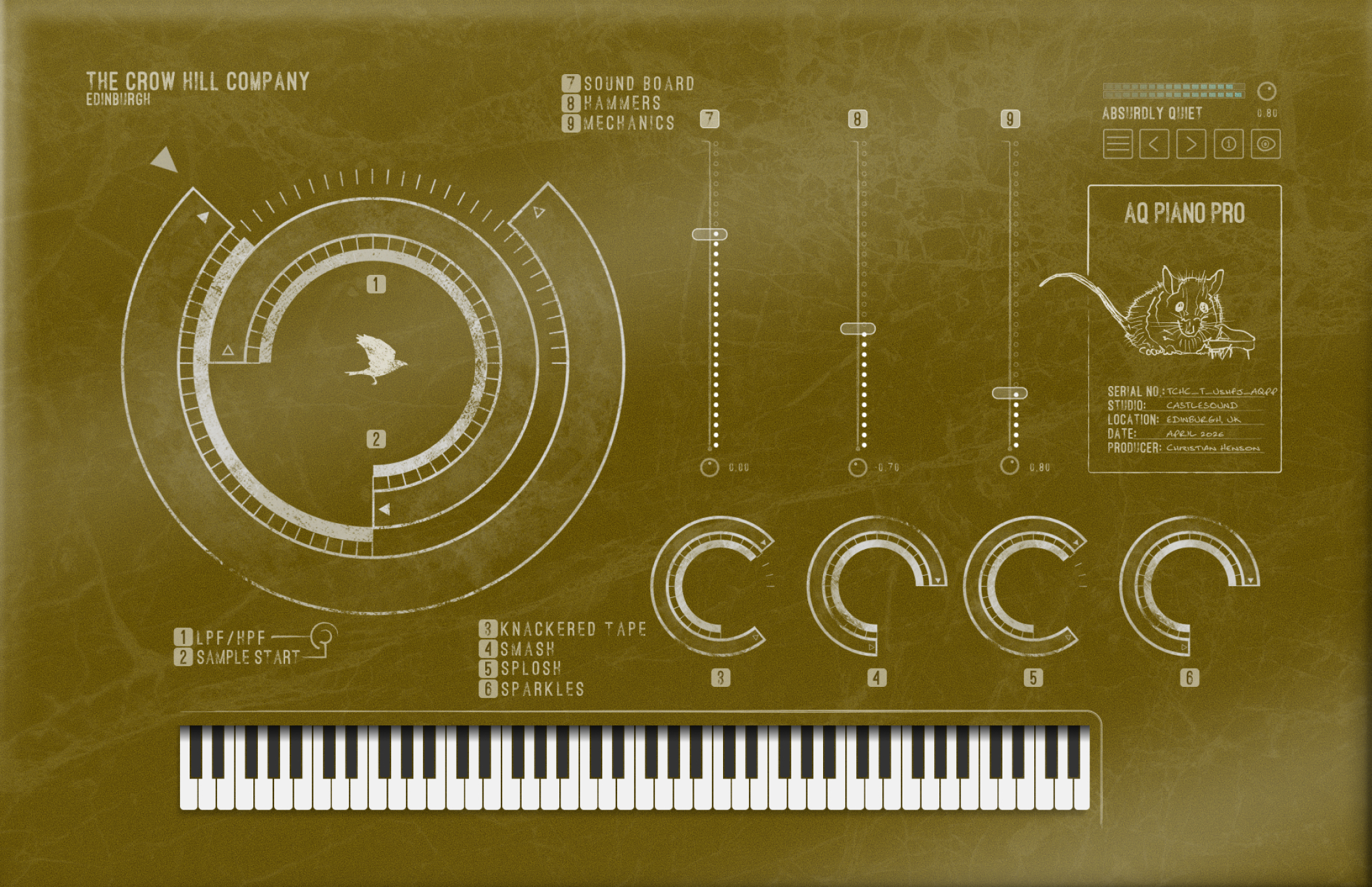
Explaining how it works, Christian Henson has this to say: “For every note you play, you have two events — the first being your note on event. This triggers two sets of samples — two microphone positions, and is controlled by the smaller inner dial; what this controls is the position at which the sample starts. So, depending on the setting of this dial, you can start the samples just before the main transient, or you can start it way back, so catch more of the action, or the point at which the fundamental occurs. For each note event, there’s a note on and a note off, and what we’ve done is meticulously record the release triggers; it sounds like such a subtle thing, but it’s so fundamental to the characteristics and character of the piano. So, for each note on event we trigger two samples, controlled by the SAMPLE START dial, and then when we release those notes we also trigger two samples; these are, basically, exactly the same note — the same moment in time, but recorded by different microphones. We came up with a novel way of recording this piano — the more standard way of mic’ing the soundboard, which is where the sound actually comes from, and mic’ing the actual hammers. So, if you miss your funky piano, then HAMMERS is the fader you’ll want to play with. The release triggers are all fed through the third [MECHANICS] fader, so you can balance the release triggers against the sound of the damper pedal being depressed and let go. So each sample goes into its own dedicated channel where you can control the volume, as is also the case with the release trigger samples; however, at the other end, the note on samples are routed directly to the effects bus, these being macros that are combinations of effects, accessible with a single encoder for each macro — namely, KNACKERED TAPE, SMASH, SPLOSH, and SPARKLES. One final piece of the trigger puzzle is the damper pedal; this triggers damper down and damper up samples that are fed through into the MECHANICS channel, along with the release triggers from the SOUND BOARD and MECHANICS channels — post fader, so the level of the first two channels also controls the level of their release triggers. Basically, what this means is that you can balance the damper pedal against the release triggers. Once attenuated, we have all of the signals leaving the MECHANICS channel going through the macros. And the final piece of the signal chain path is our large encoder, which is a LPF/HPF hybrid; neither the LPF — Low Pass Filter, which lets low stuff pass through — or the HPF — High Pass Filter, which lets high stuff pass through — is engaged at the 50/50 position, but the further back it is dialled then the duller, darker, or ‘low-passy’ it will get.”
Although a lot of work went into making ABSURDLY QUIET PIANO PRO what it is, the end result is, without question, a staggeringly personal and intimate piano with all the warmth of a felt piano, but also with a effervescent fizz of the hammers hitting the keys without being muted. Moreover, the rest of the strings are tickled and resonating with the down pedals, while a mic selection enables users to get into ABSURDLY QUIET PIANO PRO like they would when physically playing an upright piano, hearing the charm and character of all the moving parts involved in its inner workings — without losing their music to a crudely suppressed tonal range. Reality should surely dictate, then, that this will become Christian Henson’s hoped for workhorse. And anyone else’s, for that matter — all the more so if seeking an intimate piano sound without the tiresome ‘thonk’ of felt.
ABSURDLY QUIET PIANO PRO is available to buy for £29.00 GBP as a sample-based virtual instrument plug-in supporting AAX-, AU-, VST2-, and VST3 formats for macOS 11 through to 15 (Apple Silicon and Intel compatible) and Windows 10 through to 11 directly from The Crow Hill Company here: https://thecrowhillcompany.com/tools/absurdly-quiet-piano-pro/
For more in-depth information, including some superb-sounding audio demos from The Crow Hill Company co-founder Christian Henson himself, please visit the dedicated ABSURDLY QUIET PIANO PRO webpage here: https://thecrowhillcompany.com/tools/absurdly-quiet-piano-pro/
ABSURDLY QUIET PIANO PRO installation and activation requires installation of The Crow Hill App — an easy-to-use app designed by the best in the business to provide seamless download, installation, integration, calibration, and organisation of The Crow Hill Company tools — available for free from here: https://thecrowhillcompany.com/crow-hill-app/
About The Crow Hill Company (www.thecrowhillcompany.com)
Achievable as a result of selling some of the best and most interesting sample-based virtual instrument plug-ins available today, The Crow Hill Company represents realisation of company co-founder and professional composer Christian Henson’s heartfelt dream of encouraging people to make music and help them on their journey, regardless of whatever point they were at and wherever their journey began by providing access to challenges, content, networking opportunities, and resources. Always abiding by its Make Music, Your Music motto, every month the Edinburgh-based enterprise drops a new VAULTS… release, ready for all to download and make music with for the rest of their lives — free for those who value sound.
© 2026 Crow Hill Productions Ltd
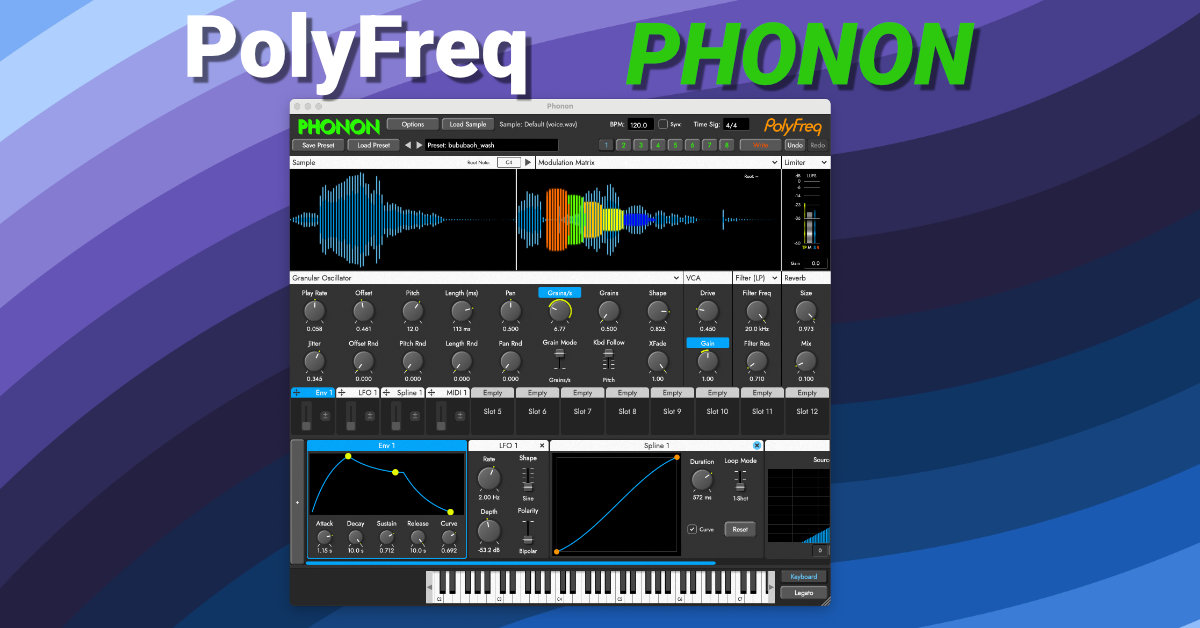
BRISTOL, UK: boutique musical tools-maker PolyFreq is proud to announce availability of Phonon as its debut plug-in — pitched as a precision laboratory for sonic alchemy, built around a high-quality sample granulation engine with root note detection, four keyboard follow modes, and legato giving it real versatility as a playable instrument — as of May 5…
Acting as a musical synthesiser first and foremost, Phonon is designed for very intentional, controllable reconstruction of one source, leaning into synchronous granular or ‘graintable’ synthesis. Sub-sample grain scheduling and separate grain rate and density controls open new vistas of repeatable, controllable timbre and tempo across macro and micro parameter ranges. Reality dictates that where other granular synths default to randomisation or multiple sources, Phonon provides users with complete control over every grain — from classic textural clouds to malleable ‘grainwave’ synthesis. Indeed, it is equal parts laboratory and playground.
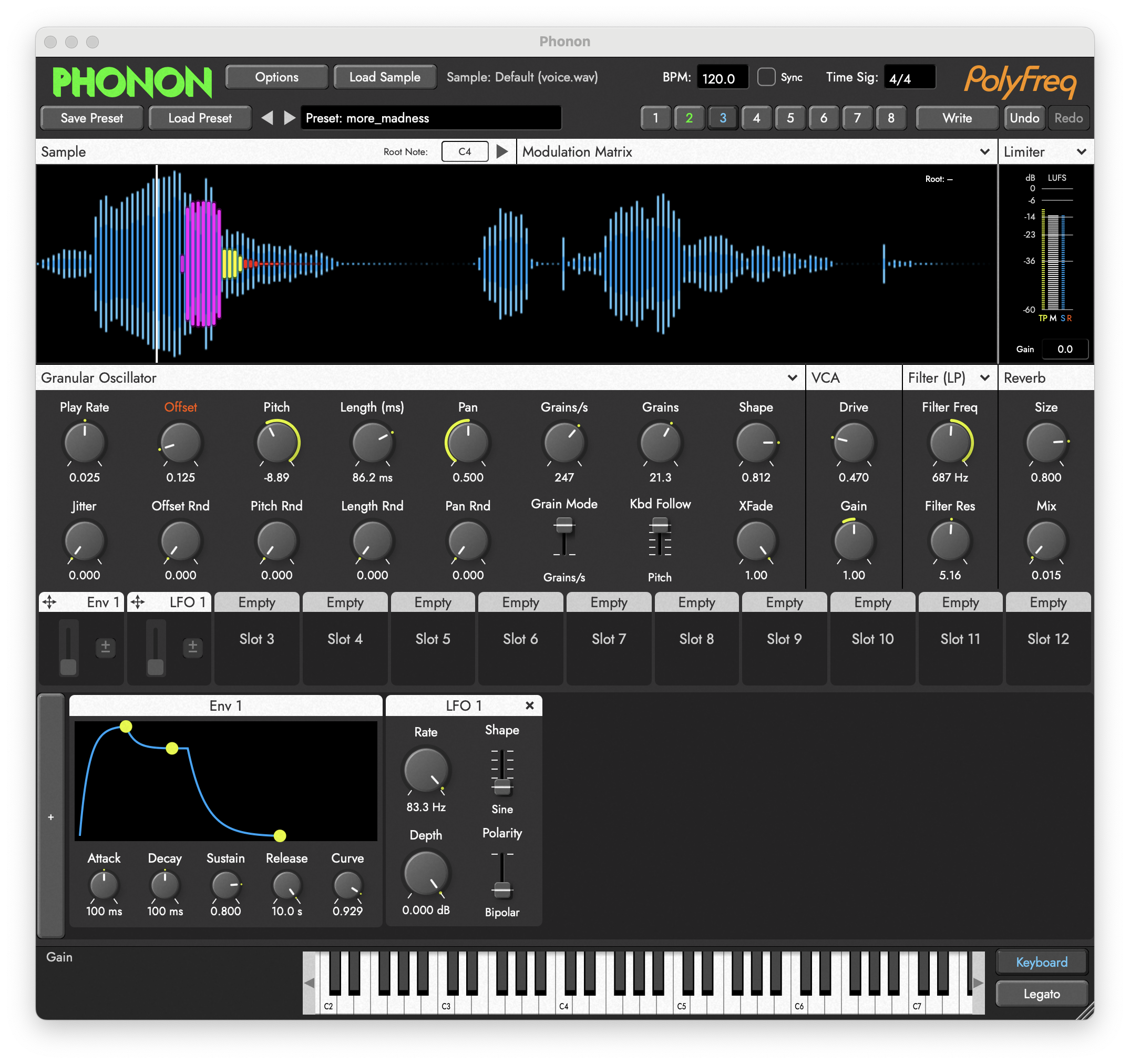
“Phonon’s development was inspired by the great creativity of early granular work from composers such as Wishart and Roads, and the deep listening of Oliveros, with a desire to make this wild, creative territory more accessible to electronic music production and sound design, without stripping away what makes it strange and inspirational.” So says PolyFreq founder Nick Mariette by way of an illuminating introduction. It aims for ease of use, with a simple drag-and-drop workflow for modulation, and most features are immediately visible, with minimal menus or hidden options. And a flexible array of audio-rate modulation sources provide huge scope for patches that respond and evolve, including LFOs (Low Frequency Oscillators), envelopes, sample metadata, sequencers, MIDI (Musical Instrument Digital Interface) control data, and various noise flavours.
Features additionally worthy of the edited highlights treatment here include Phonon’s granular engine — eight voices of polyphony with up to 256 grains per voice and sub-sample precision that bridges the gap between classic textures and sharp ‘graintable’ synthesis; effects — shape sounds with a character-driven signal chain, from saturating drive to resonant filtering, as well as a utility reverb for glue or depth; presets — easily capture, export, evolve, and share sonic creations with sample embedding and eight-way snapshots; and drag-and-drop workflow in a resizeable interface for easy enjoyment as a standalone instrument or for plug-in-based DAW (Digital Audio Workstation) production.
Phonon’s uses are almost endless — think time stretching; pitch shifting; sample mangling; sound design; classic textural, granular clouds; synchronous, tuned granular tone creation; creating a synth from any sample; rhythmic grain generation, synced to host; beat retiming and timbre distortion; and more besides. Back to Nick Mariette: “Phonon is intended for reshaping beats and designing synth leads as much as for losing time in ethereal granular atmospheres; I hope it will connect people to listening differently, discovering the sounds within sounds.”
Anyone attending SUPERBOOTH26, May 7-9, FEZ-Berlin, Germany is hereby encouraged to swing by Booth H116 there, where PolyFreq will be showcasing Phonon to the musical masses assembled and Nick Mariette himself will be on hand to personally provide a warm welcome with an open invitation to discover those sounds within sounds. Spanning chaotic clouds to precise synthesis, controllable sonic alchemy is there for the taking so why not take this hands-on opportunity to discover and delight in vibrating matter differently with Phonon!
Phonon is available to buy as a standalone or VST3 plug-in for macOS (10.13 or later) and Windows (10 or later) at a 33% launch discount — duly rising thereafter to its full price of $89.00 USD (excluding tax)/€76.00 EUR (including tax)/£68.00 GBP (including tax) — directly from PolyFreq here: https://www.polyfreq.com/products
For more in-depth information, please visit the PolyFreq products webpage here: https://www.polyfreq.com/products
About PolyFreq (www.polyfreq.com)
Energised by its deep-rooted and diverse sound culture, PolyFreq is a boutique maker of musical tools based in Bristol, UK. As an audio technologist, founder Nick Mariette has spent over two decades at the heart of modern spatial sound. Spanning completing a PhD in audio augmented reality to working within the teams behind Dante, Dolby Atmos, and Lake Technology, his career has navigated the space between high-end industry research and underground innovation.
© 2026 PolyFreq
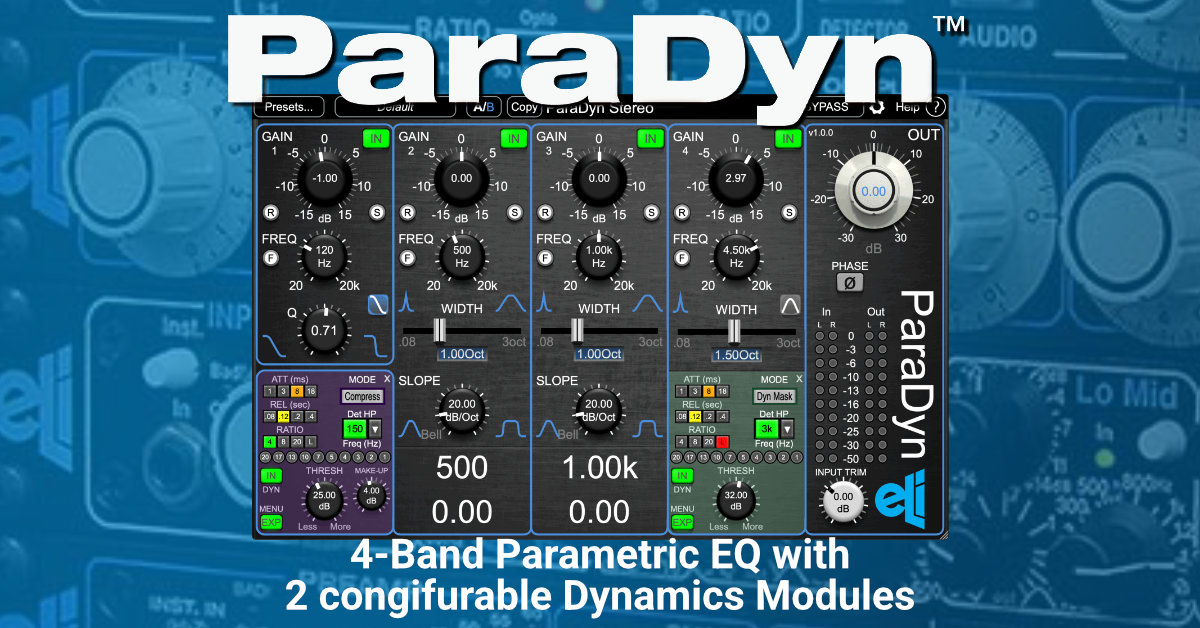
 LAKE HIAWATHA, NJ, USA: professional audio signal processing equipment designer and manufacturer/plug-ins producer Empirical Labs Inc. (ELI) is proud to announce availability of its four-section ParaDyn™ plug-in — pushing the production envelope with each of those sections featuring a parametric EQ derived from its BIG FrEQ™ plug-in (including support for distinctive flat-top band shapes), sections ‘1’ and ‘4’ enhanced by the inclusion of two fully-configurable dynamic modules with unique processing options, opening up a whole new world of dynamic control over tone and volume — as of April 24…
Although at its core ParaDyn™ is a four-section parametric EQ, the real magic lies in its DYN (dynamics) modules available in sections ‘1’ and ‘4’. Indeed, it is here that ELI’s creative colouring comes into play. Put it this way: those two sections offer some unique capabilities that effectively separate the ParaDyn™ plug-in from any other EQ on the market. Besides being expanded parametric band EQs, they even offer ELI’s pre-eminent knee compression.
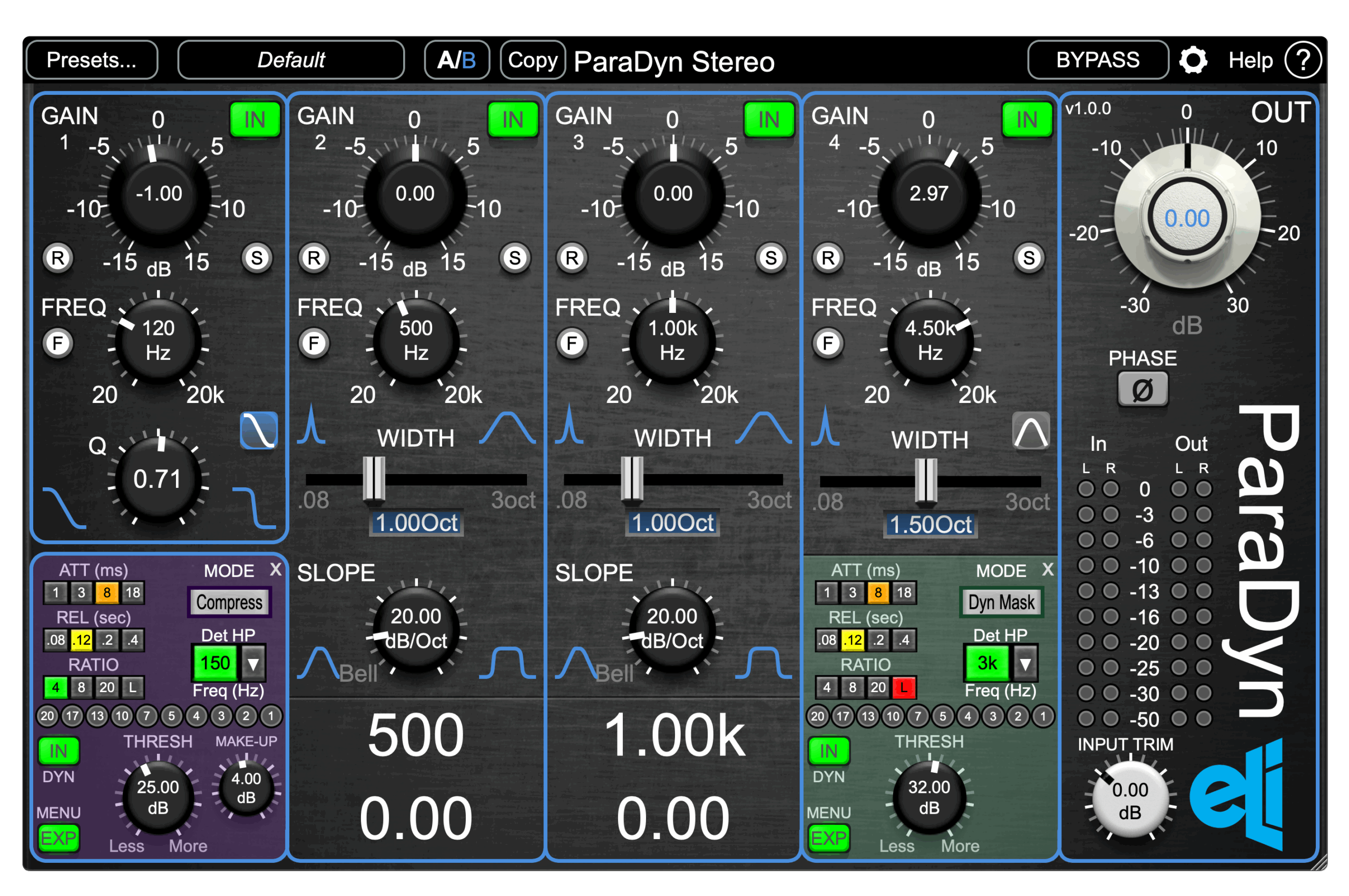
Ultimately, users can duly deploy ParaDyn™ as a regular dynamic EQ in Dyn EQ MODE or engage Dyn Mask MODE functionality that looks at the material surrounding the target frequency, whereupon it will not apply as much dynamics if there is material masking that target frequency — functionally similar to ELI’s DerrEsser hardware, itself billed as being a multi-function dynamic filtering device (delivered in an API 500 Series module format).
And as if all that was not enough to be getting on with, there is also another option available within each of those DYN modules — namely, Compress MODE that splits the band into two independent sections, thereby turning section ‘1’ or ‘4’ into a full bandwidth compressor. It is designed to offer ELI’s classic compression found in its other products and is a great way to turn ParaDyn™ into a sort of ‘modular’ channel strip — just as well, then, that the plug-in comes complete with a carefully curated collection of factory presets that show some great examples of how its sections can be combined to work in specific signal flows that are as flexible as they are useful.
It is fair to say that the ParaDyn™ GUI (Graphical User Interface) looks superficially similar to ELI’s perennially popular BIG FrEQ™ plug-in, its inaugural EQ plug-in inspired by its much-loved Lil FrEQ hardware EQ’s precision and warmth (whereby the company creatively combined most of the sound sculpting tools an engineer needs into a compact single rack space box, while still offering the highest performance of any design in its class). Clearly, anyone already familiar with BIG FrEQ™ should feel right at home working with ParaDyn™ as it opens up a whole new world of dynamic control over tone and volume.
ParaDyn™ is available at an attractive introductory promo price of only $19.00 USD for 30 days after release — rising thereafter to its regular price of $39.00 USD — directly from ELI here: https://www.empiricallabs.com/product/paradyn/#buy
For more in-depth information, please visit the dedicated ParaDyn™ webpage here: https://www.empiricallabs.com/product/paradyn/
A fully-functional, 15-day trial of ParaDyn™ is available to download from here: http://www.empiricallabs.com/downloads/ (ParaDyn™ is iLok protected with activation either by iLok USB dongle or local machine activation.)
About Empirical Labs Inc. (ELI) (www.empiricallabs.com)
Empirical Labs Inc. (ELI) designs and manufactures professional audio signal processing equipment used in recording studios, live sound, broadcast studios, and other audio production facilities all over the world while working hard to live up to its stated simple philosophy: “We want to make products that work a little easier, a little better, and a lot longer — and make sure they’re fun to use.” After all, empirical — in its most positive interpretation — means fashioned from experience. ELI also produces plug-ins for DAWs (Digital Audio Workstations) and software for DSPs (Digital Signal Processors).
© 2026 Empirical Labs Inc. (ELI)
UVI release Orchestral Suite 2, their new flagship orchestra, available now with special introductory pricing
Paris, May 12th, 2026 – UVI release Orchestral Suite 2, a ground-up redesign and re-recording of the complete symphonic orchestra, including an all-new Composer mode. The second-generation suite delivers a spectrum of strings, woodwinds, brass, percussion, choirs, and keys, captured with full articulation depth, editable multi-microphone setups for most instruments, and powered by a new, more powerful engine. Orchestral Suite 2 is available now with a special introductory price of $129 / 129€ through May 31st, 2026 (regularly $199 / 199€). https://www.uvi.net/orchestral-suite-2
The Complete Symphonic Orchestra
Recorded by professional players in a dedicated orchestral room, Orchestral Suite 2 brings together solo and ensemble configurations across strings, brass, and woodwinds, with percussion, choirs, and a wider category of voices including cathedral organ, harpsichord, celesta, classical guitar, and harp. Articulations are recorded rather than modeled, and accessible from the keyboard or directly from the panel.
Composer
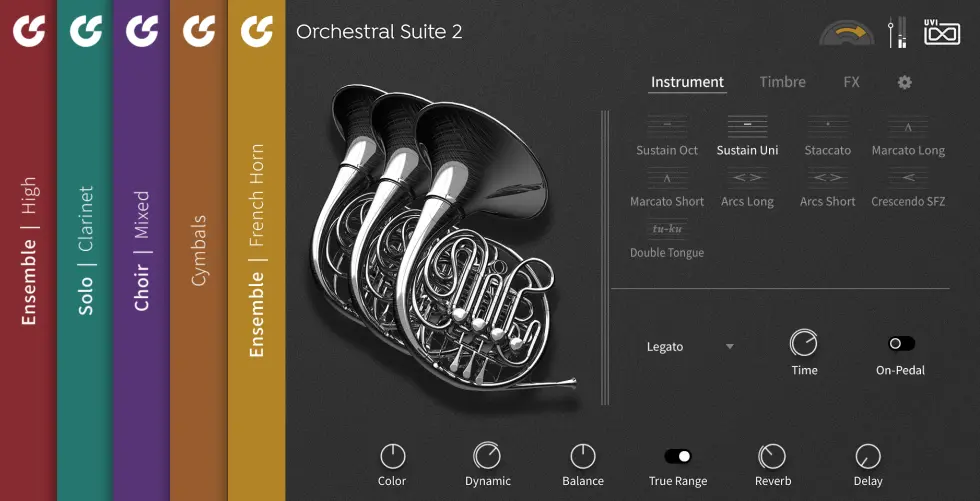
At the heart of Orchestral Suite 2 is Composer, a new chord engine for orchestral writing. A single key triggers a fully voiced chord across multiple sectional layers, with chord type, voicing, and dynamics shaped from the panel. Useful for sketching ideas at speed, building orchestral mockups, and arriving at finished cues without leaving the keyboard.
New Engine, A New Library
A powerful new engine sits below redesigned interfaces, with macro controls placing the most expressive moves close at hand and deeper editing only a click away. The preset library has also been rebuilt, with new patches written specifically for the second-generation recordings.
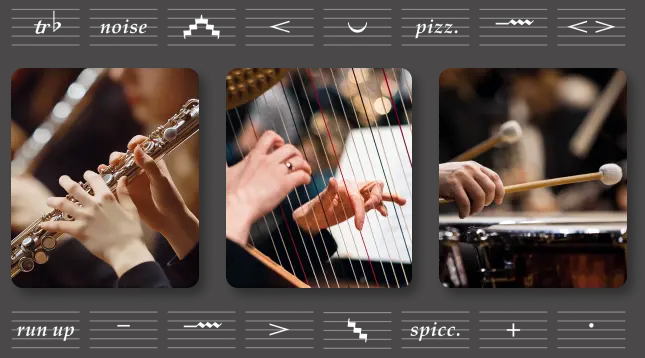
Key Features:
• Full arrangement: solo and ensemble strings, woodwinds, brass, percussion, choirs, keys and more
• New Composer engine, with multi-layer chord voicing under a single key
• New recordings captured by professional players with multi-microphone setups
• Full articulation depth, switchable from the keyboard or directly from the panel
• Macro controls for Color, Dynamic, True Range, Reverb, and Delay across every instrument
Orchestral Suite 2 offers native 64-bit standalone operation by way of Falcon or the free UVI Workstation, providing comprehensive support for all modern DAWs and simultaneous authorization on up to 3 computers or iLok keys.
PRICING AND AVAILABILITY
Orchestral Suite 2 is available now for $129 / 129€ (regularly $199 / 199€) through May 31st, 2026.
Users of Orchestral Suite can upgrade for $59 / 59€ through May 31st, 2026.
Owners of SonicBundle will receive an additional $10 / 10€ voucher.
ADDITIONAL PRODUCT INFORMATION
Additional information on Orchestral Suite 2 is available at:
https://www.uvi.net/orchestral-suite-2
Also included in:
Get Orchestral Suite 2 and our entire catalog of products instantly with SonicPass.
SonicPass lets you enjoy unlimited access to 1,000+ instruments and effects, including day-one access to new releases, for $24 / 24€ a month or $240 / 240€ annually.
About UVI
UVI is a leading developer of audio production tools, leveraging over 20 years of applied DSP research, recording expertise, and design. We are a small but spirited team with a global footprint, crafting instruments and effects from the ground-up, built to inspire and empower musicians and audio professionals of all backgrounds.
You can find us at live shows, on hit records, in blockbuster films, AAA games, and in bedroom studios around the world. Wherever you are we’re here to support the journey, helping creators everywhere shape the sound of tomorrow.
“For 15 years, Heritage Audio has built tools that earn their place in serious studios—not by chasing trends, but by getting the fundamentals right. To celebrate that journey, we’re releasing something special: the Baby R.A.M 15th Anniversary Black Edition.”
Madrid, Spain: Heritage Audio® is proud to announce the availability of the Baby R.A.M Black
Edition, a limited edition Baby R.A.M for those who never connected with the classic console
aesthetic of the 70s but still seek for the ultra-transparent passive attenuation, zero coloration, and
absolute reliability of the best-selling passive monitor controller of all time.
HOW TO IMPROVE A TOP SELLING PRODUCT?
Heritage Audio gave their engineers what sounded like a simple brief: improve the Baby R.A.M for Heritage Audio’s 15th anniversary. After weeks of revisiting the original design, the conclusion was unanimous—there was nothing to improve.
In a world where technology moves fast, some things don’t benefit from change. A pure, passive design built with top-tier components—like the Baby R.A.M—doesn’t get more transparent than 100% transparency. And you can’t meaningfully improve the usability of a category-defining, best-selling monitor controller that’s already proven itself for several years now.
SO WHAT’S LEFT TO DO?
They went through every photo, every comment, every review we could find and the only recurring criticism of the Baby R.A.M had nothing to do with performance: It was the look. While the original Baby R.A.M proudly channels the spirit of classic vintage consoles—with its RAF blue-grey metalwork and oversized, irresistibly smooth Marconi knob—not everyone connected with that aesthetic.
And that’s where this story really begins.
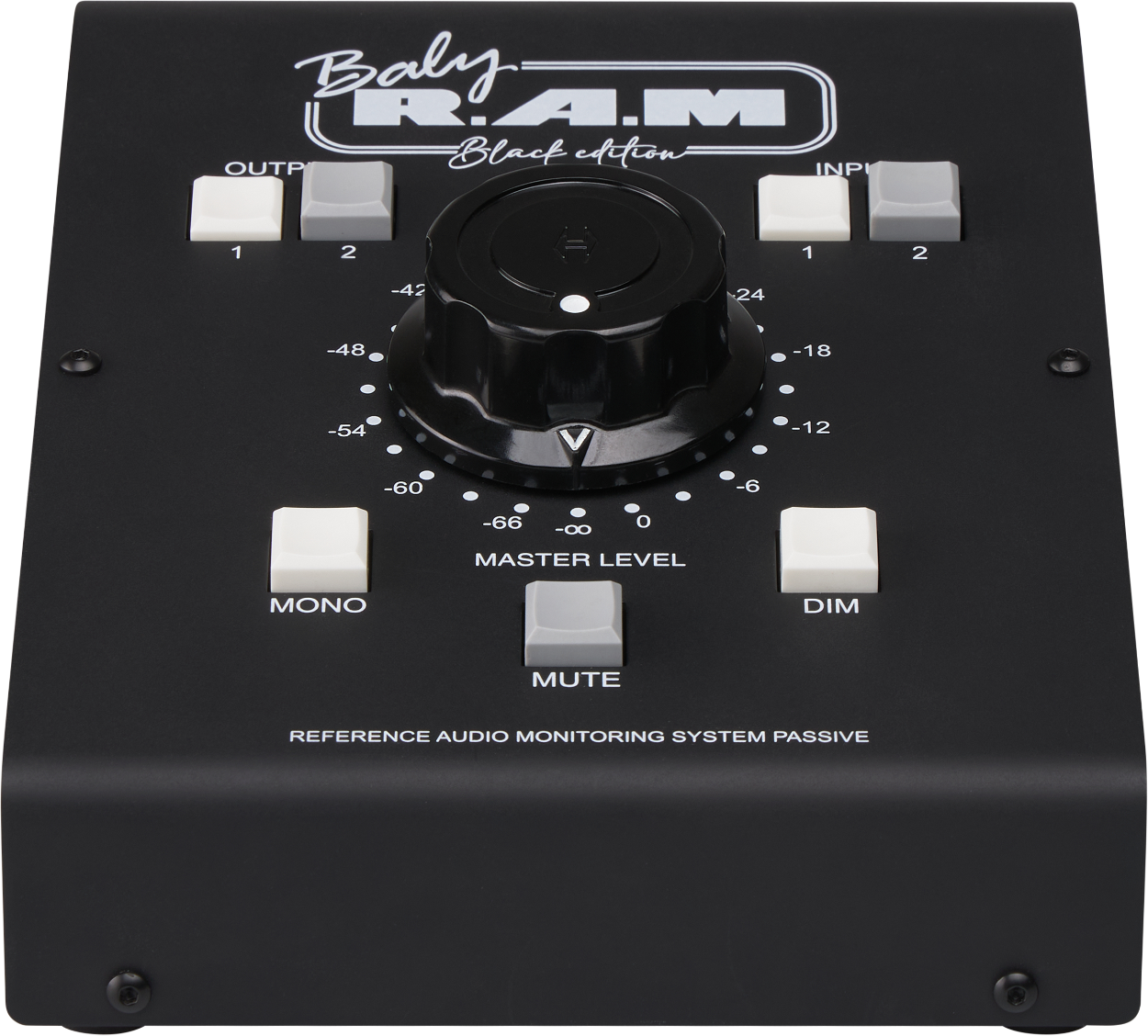
SAME GUTS, NEW ATTITUDE
This edition keeps the exact signal path thousands of engineers trust: ultra-transparent passive attenuation, zero coloration, and absolute reliability. No compromises, no redesigns, because when something already works, you don’t mess with it.
Same internals. Same circuit. Same reason it’s been the top-selling passive monitor controller for almost a decade. What has changed is the attitude.
Clad in a deep black finish, this edition steps away from the blue-grey, vintage-console nostalgia, opting for a cleaner, more modern and smarter look. To match the satisfying feeling of a Marconi knob, we’ve user an equally satisfying RCA type black knob and, of course, the same perfectly stepped potentiometer that made the Baby R.A.M the legend it is.
The Baby R.A.M Black Edition is a limited release—once they’re gone, they’re gone.
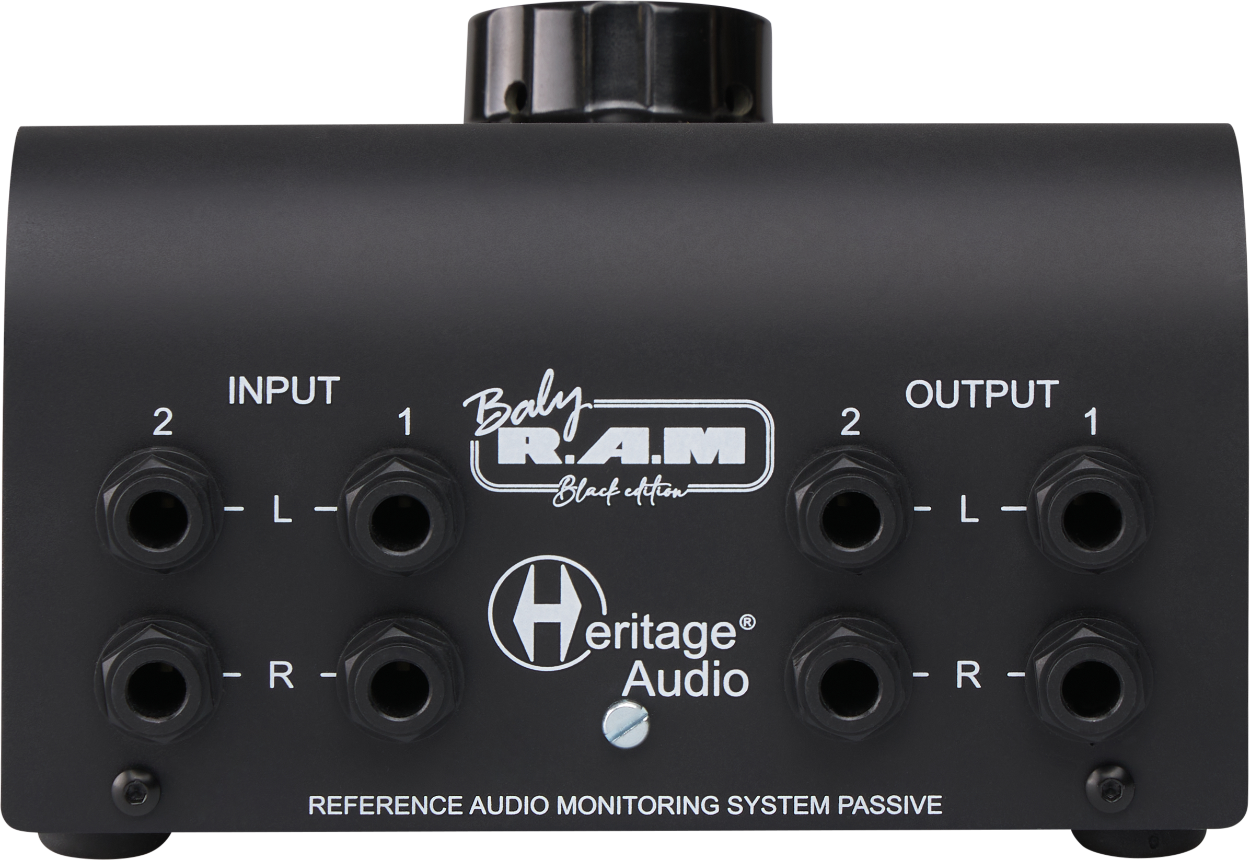
Heritage Audio’s Baby R.A.M Black Edition is shipping via Heritage Audio’s global network of dealers (https://heritageaudio.com/where-to-buy-international/).
The Baby R.A.M Black Edition is available today with an MSRP (Manufacturer’s Suggested Retail Price) of €199.00 EUR (including VAT) in the EU and a MAP (Minimum Advertised Price) of $199.00 USD, US distribution being handled via RAD Distribution (https://raddist.com/en/brands/heritage-audio).
Take a guided tour of the Baby R.A.M Black Edition connections and features with Heritage Audio Product Specialist Sam Orlich here:
About Heritage Audio (www.heritageaudio.com)
Heritage Audio was founded in 2011 by Peter Rodriguez. As a civil engineer and music producer, he went from building wind turbines to following his true passion — developing recording equipment with the vintage sound that he himself admired so much and so many others yearned for. Fortunately for all, he was able to master the key elements necessary to make high-quality recording gear affordable and reliable by combining his analytical mindset with his experience as a producer within a relatively short space of time. Today, the 15-person team has expanded its production plant located in the heart of Madrid, Spain, where it collectively continues to follow a philosophy of making vintage sound possible for today’s studios, successfully introducing innovative products to rank amongst the most popular brands with top retailers throughout the world.
As Heritage Audio marks its 15th anniversary in 2026, the motto “Expect the Unexpected” sets the tone for an ambitious year filled with new product launches.
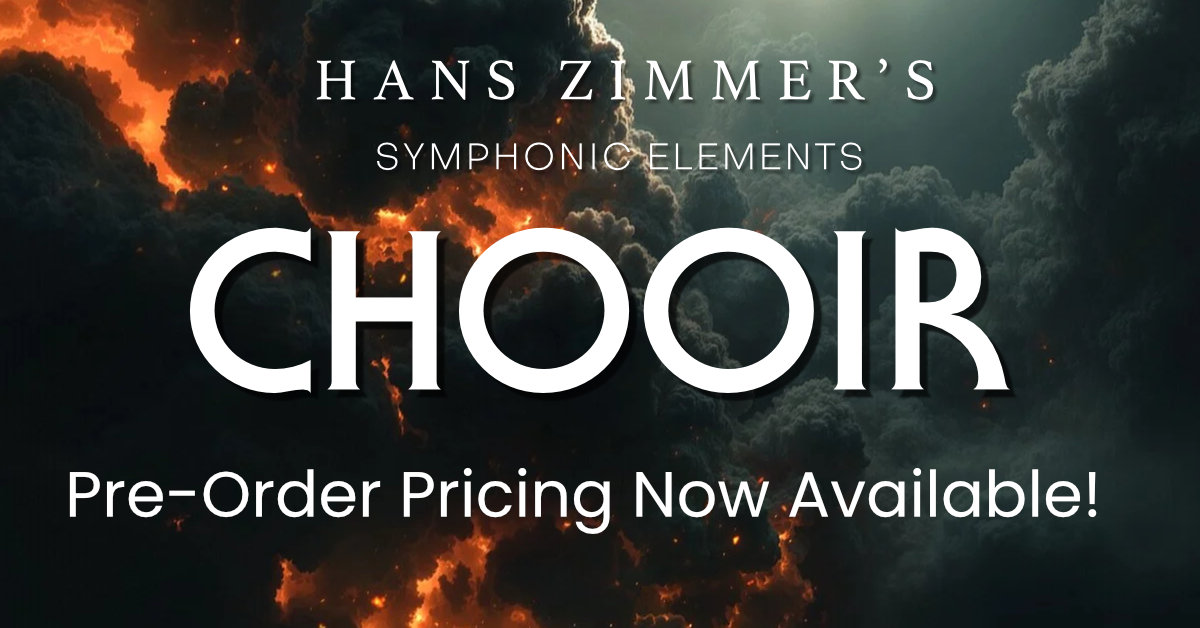
Ready-arranged male, female, and boys choir textures without complex key switching or word programming

Berlin, Germany, April 28, 2026 — UJAM introduces Symphonic Elements CHOOIR, a dedicated choir instrument built using samples from the orchestral library of film composer Hans Zimmer. CHOOIR is now available for preorder ahead of its full release on May 13, 2026. The latest addition to the Symphonic Elements series, CHOOIR joins STRIIIINGS, DRUMS, BRAASS, and PERRCS, rounding out the lineup with a vocal element.
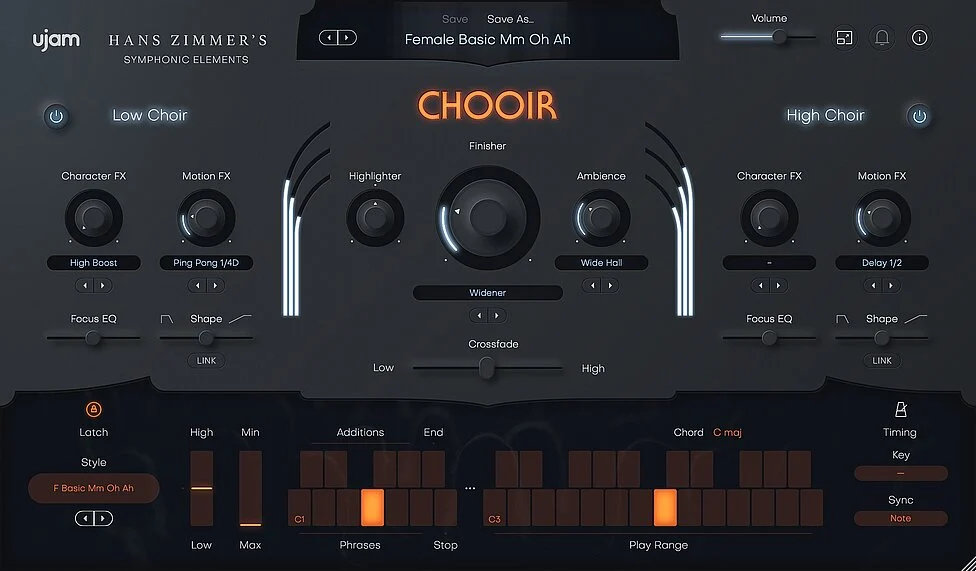
Unlike traditional choir sample libraries that require voice-by-voice arrangement, CHOOIR follows UJAM’s Symphonic Elements approach, offering pre-arranged textures that sit naturally within an arrangement, spanning bass, tenor, alto, soprano, and boys ensembles with a range of vowel and consonant articulations.
Whether supporting a string arrangement with a bold choir line or introducing darker vocal textures into ambient productions, its phrase-based structure enables users to generate convincing choir performances without complex key switching or word programming, allowing for a more direct and intuitive workflow.
“A choir has been the number one request from our users to a degree that it became an in-joke. I’m so happy we could finally close this gap,” said Peter Gorges, Co-Founder of UJAM. “Since this is based on Hans’s own material, users will quickly hear that familiar cinematic palette he’s known for come through in their own work.”
Key Features
Availability
Symphonic Elements CHOOIR supports VST2, VST3, AU2, and AAX formats and is compatible with macOS and Windows operating systems.
Pre-Order Pricing (April 28 – May 12, 2026)
· Symphonic Elements CHOOIR: $149
Introductory Pricing (from May 13th, 2026, until June 28th, 2026)
· Symphonic Elements CHOOIR: $189
· Symphonic Elements CHOOIR Loyalty Price: $169
MSRP
· Symphonic Elements CHOOIR: $249
· Symphonic Elements CHOOIR Loyalty Price: $229
For more details, visit www.ujam.com
About UJAM
UJAM was co-founded by Hans Zimmer and Pharrell Williams, both musicians whose careers have been significantly supported by technology. The vision behind UJAM is to make technology even more accessible and encourage even more people to make music.
This vision is being realized by a team of virtual instrument pioneers who had previously developed legendary virtual instruments from Steinberg and Digidesign — from Steinberg Hypersonic to Virtual Guitarist, from Digidesign Xpand to Transfuser — and who finally want to realize their vision of shortening the path from the idea to the perfect track. More fun, better results, less complexity.

Bremen, Germany, April 9, 2026 – Release 26.03 gives plugin manufacturers end-to-end distribution infrastructure, subscription-ready licensing, and branded delivery tools built directly into the development workflow, no custom backend required.

Building a great plugin is one of many challenging aspects to a commercial launch. Getting it licensed, delivered, updated, and monetized sustainably is where development teams have historically had to build almost as much infrastructure as the plugin itself. UJAM today announces that Gorilla Engine, the professional plugin development platform behind the company’s own commercial catalog and products from teams at Avid, Reason, Loopcloud, Crow Hill, and others is now available through structured public licensing for independent developers, studios, and enterprise teams worldwide. Alongside this opening, UJAM releases Gorilla Engine 26.03, which introduces third-party Product Hub support: a fully integrated licensing and delivery system, designed to eliminate that infrastructure burden entirely.
Product Hub: A Complete Licensing and Delivery Stack, Included
The moment a plugin leaves development, it needs a delivery and licensing system. Most teams build one from scratch, or patch together third-party services not designed to work together. Product Hub replaces that patchwork with a purpose-built solution integrated directly into the Gorilla Engine workflow, and with release 26.03 it is now open to all third-party manufacturers.
With Product Hub, developers can manage products, builds, and releases from a single interface, ship installers directly to customers at no additional traffic cost, and offer optional branded downloaders with resume support for large file sizes. Webshop connections allow license data to flow into Product Hub automatically when a purchase event fires, and the Product Hub JavaScript client library gives developers a straightforward path to adding username and password activation directly inside their products. Teams that need deeper reporting or custom workflows have access to Product Hub’s full API for building their own dashboards and integrations.
Product Hub supports time-limited licenses, making monthly and annual subscription models more practical and with minimal effort. Product Hub charges no per-transaction fees and no traffic costs, which means the economics improve as a catalog grows rather than compounding against the developer.
A Professional Platform, End to End
Product Hub is one layer of a platform that handles the full lifecycle of plugin creation. Gorilla Engine gives developers access to more than 60 professional-grade effect algorithms, filters and oscillators, all inside a modular environment where sound designers, developers, and UI designers can work in parallel. Sound core design, prototyping, and final compilation each have dedicated tooling, with a flexible UI layer and scripting language that keeps audio logic, interface layout, and control behavior cleanly separated.
When a plugin is ready to ship, Gorilla Engine manages the complete packaging pipeline. Developers can preview inside popular DAWs and export signed and notarized installers for VST, AU, AAX, and standalone formats from a single environment. Plugins built on Gorilla Engine run natively across macOS (universal binary) and Windows (x86). Built-in encryption discourages low-effort piracy without adding friction for legitimate users, optional iLok integration satisfies customers who expect it, and Native Kontrol Standard (NKS) and MIDI Polyphonic Expression (MPE) support ships out of the box.
Gorilla Engine is also available as a C++ library that can be included within existing plug-in tech stacks. It is available for macOS and Windows as part of the SDK and can also be compiled to Linux ARM or even bare metal, upon request.
Audio performance holds up under real-world conditions where the engine carries no meaningful CPU footprint and is highly optimized in collaboration with well-known hardware developers.
The Practical Path for Teams Migrating from Kontakt
For development teams currently working in Kontakt, Gorilla Engine offers a direct migration path rather than a platform shift. Gorilla Script, the platform’s scripting language, is intentionally similar to Kontakt Script (KSP), meaning many existing scripts carry over with minimal modification. Core group and mapping parameters export directly, interface design and control logic move to a JavaScript-based UI layer, and modulation, filter, and effect chains can be rebuilt quickly inside Gorilla Editor. Teams with years of accumulated KSP investment do not need to start from scratch.
A plugin built with Gorilla Engine ships as its own product, with its own installer, its own brand, and its own presence on a customer’s system. For developers building a catalog identity or targeting customers outside the Kontakt ecosystem, that difference is fundamental.
The economics are equally direct. Getting started as a developer often requires a licensing investment of thousands of dollars before a single product ships. Gorilla Engine’s free license tier gives developers full access to the platform at no upfront cost, including the ability to build, test, and prototype without a financial commitment until they are ready to distribute commercially.
The competitive context makes this worth considering seriously. While alternatives to Kontakt exist, most treat their engine as a side project rather than a product with an active roadmap. Gorilla Engine is UJAM’s own platform, which means it receives continuous investment as a first-party product, maintained by a team whose commercial success depends directly on its quality and reliability.
Release 26.03: What Else Is New
Product Hub is the centerpiece of the 26.03 release, but the update goes further. Single sign-on now covers gorilla-engine.com, Gorilla Compiler, Product Hub, and the helpdesk, giving developers a single login across the entire development workflow. Automated Apple Notarization is now built into Gorilla Compiler, removing a step that previously required manual intervention for every macOS distribution. The release also contains more than 50 additional features, improvements, and bug fixes developed in response to feedback from the developer community.
“We built Gorilla Engine because we needed it for our own releases, and it has been the platform behind everything UJAM has shipped commercially,” said Wolfram Knelangen, COO at UJAM. “Product Hub is the piece that closes the loop. With it, a developer on Gorilla Engine gets the same licensing and delivery infrastructure we use ourselves, without having to build any of it. We think that changes what is possible for independent developers and for the enterprise teams who have spent years building and maintaining their own delivery infrastructure.”
Looking Ahead: GE React
Later in 2026, UJAM will introduce GE React, a new UI layer for Gorilla Engine that brings a React-inspired component model to plugin interface development. GE React is not standard web React. It is a purpose-built flavour of React, engineered specifically for the performance constraints and real-time requirements of audio software. Developers familiar with component-based UI patterns will find the model recognizable, while the implementation is designed from the ground up for plugin development rather than adapted from browser-based tooling. UJAM expects GE React to make interface development faster and more maintainable across teams of all sizes, and the project reflects the platform’s continuing commitment to modern, developer-friendly tooling.
Availability
Gorilla Engine is available now for macOS and Windows under a tiered licensing model. A free license provides full access to the Gorilla Engine development environment for learning, experimentation, and private plugin creation. Commercial and enterprise licenses are available for teams planning to distribute or monetize their work. Further information and license options are available at gorilla-engine.com.
About UJAM
UJAM was co-founded by Hans Zimmer and Pharrell Williams, both musicians whose careers have been significantly supported by technology. The vision behind UJAM is to make technology even more accessible and encourage even more people to make music.
This vision is being realized by a team of virtual instrument pioneers who had previously developed legendary virtual instruments from Steinberg and Digidesign — from Steinberg Hypersonic to Virtual Guitarist, from Digidesign Xpand to Transfuser — and who finally want to realize their vision of shortening the path from the idea to the perfect track. More fun, better results, less complexity.
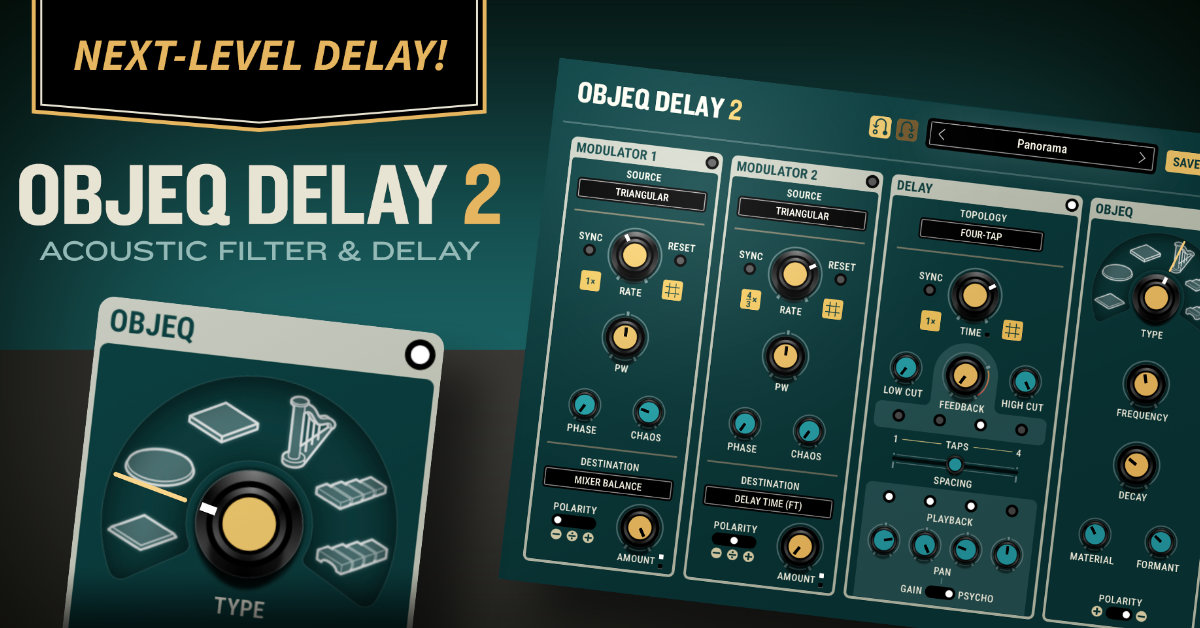
Next-level delay — Introducing Objeq Delay 2
Objeq Delay 2 reimagines delay by merging classic techniques with acoustic resonance. Four delay topologies range from elegantly simple to intricately novel, with select modes featuring immersive psychoacoustic panning. Dual modulators provide LFOs, dynamics-based controls, and pitch tracking, enabling evolving and responsive effects. AAS’s morphable acoustic filter weaves through it all, transforming these powerful tools into something entirely new.
“Objeq Delay 2 grew out of everything we learned building the original, and then pushed further than we initially imagined,” says Eric Thibeault, lead product designer at Applied Acoustics Systems. “The four topologies each bring a distinct creative angle, the additional modulator adds real expressiveness throughout, and the redesigned acoustic Objeq filter—with its morphable objects and frequency-response inversion—gives the whole thing a sonic character that I think adds to any production arsenal.”
New Objeq Delay 2 features include:
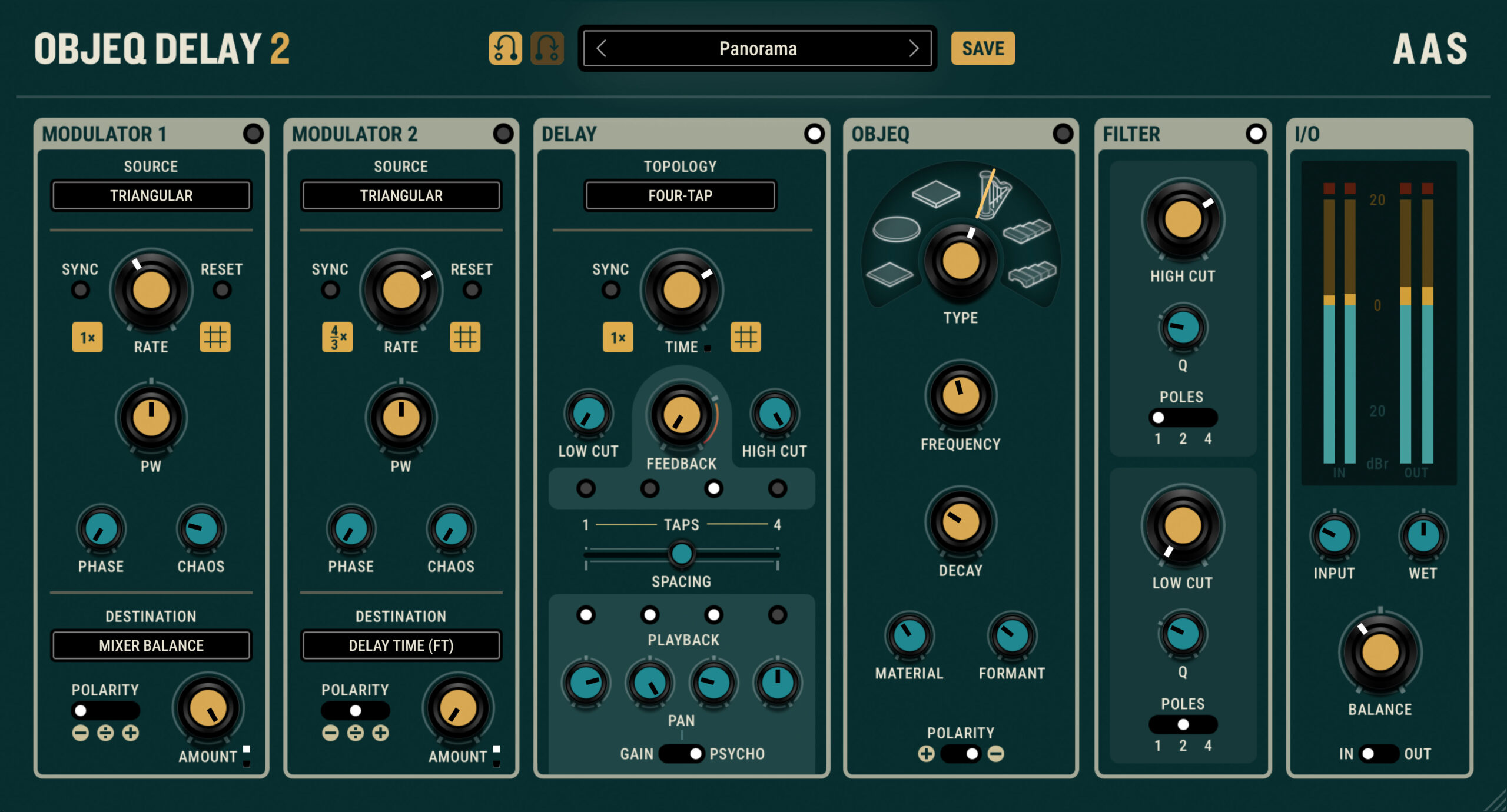
Objeq Delay 2 — Acoustic Filter and Delay plug-in https://www.applied-acoustics.com/objeq-delay-2/
Objeq Delay 2 runs on both macOS and Windows in 64-bit hosts that support the VST3, Audio Units, and AAX Native formats.
Objeq Delay 2 is available now at a suggested retail price of US$99. The upgrade for Objeq Delay 1 registered users is priced at $49.
Introductory Promotion
To mark the release of Objeq Delay 2, a 20% discount is offered on Objeq Delay products until May 5, 2026.
About Applied Acoustics Systems
Applied Acoustics Systems (AAS) was founded in 1998 and is based in Montreal, Quebec, Canada. As a privately-held company, it specializes in software-based synthesis tools for professional musicians and sound designers. Since releasing Tassman, the first virtual instrument based on physical modeling, AAS has come to be recognized as the industry leader in this exciting new field of synthesis.
 KATOWICE, POLAND: Thephonoloop is proud to announce availability of outlines as its latest NKS (Native Kontrol Standard) ready VI (virtual instrument) for Native Instruments’ Kontakt Player free sample player — beautifully blending raw acoustic gestures with tape loops and modular-processed tonal experiments to spark musical momentum as the sample-based instruments with character-producing Polish two-person team’s approach to a collection of tonal variations designed to be combined and explored, each preset being an outline of a musical idea ready to be expanded and reshaped into something larger — as of March 12…
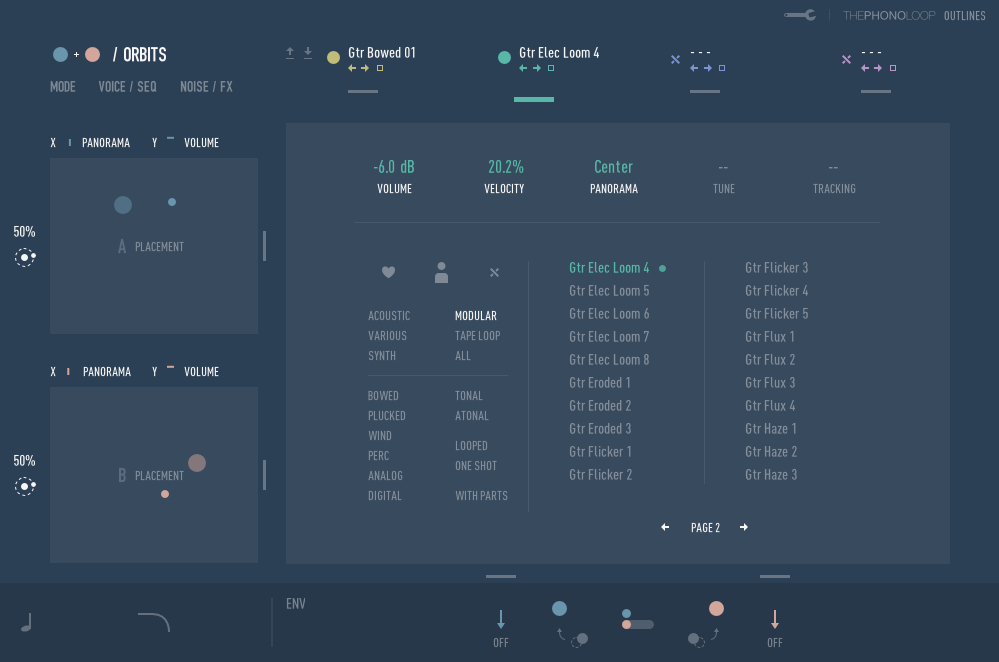
As an outline of a musical idea ready to be expanded and reshaped into something larger, each preset propelling outlines’ openly creative collection of tonal variations duly designed to be combined and explored is a result of Thephonoloop spending some serious time gathering suitable source material — think ACOUSTIC (119 sources), MODULAR (139 sources), SYNTH (67 sources), TAPE LOOP (65 sources), VARIOUS (six sources), and many more besides, focusing on texture, detail, and contrast, creating a wide range of acoustic and synthetic sounds that can interact and form unexpected combinations.
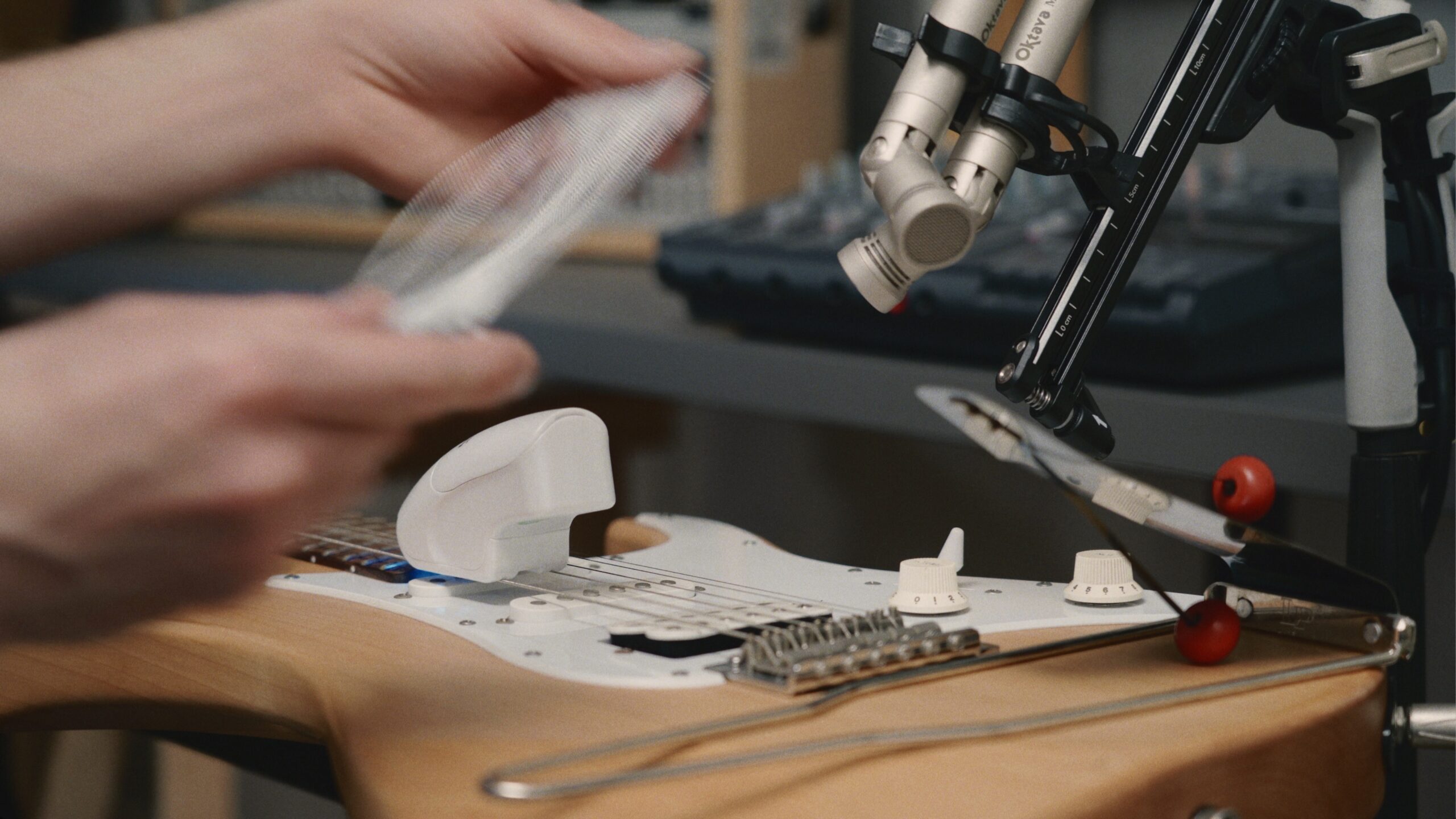
Creatively speaking, flutes, mallet instruments, strings, and other small acoustic sources were recorded up close to capture the subtle gestures of the instruments concerned. Thephonoloop took it slow in the process of doing so, taking time to uncover hidden gems and embrace happy accidents along the way, with air, creaks, field ambience, finger noise, and room ambience all treated as honorary guests rather than trespassers — the library would not have existed without them. These recordings were further blended with analogue and digital synthesis, modular experiments, and tape loops to form the palette of textures from which the sounds of outlines emerged.
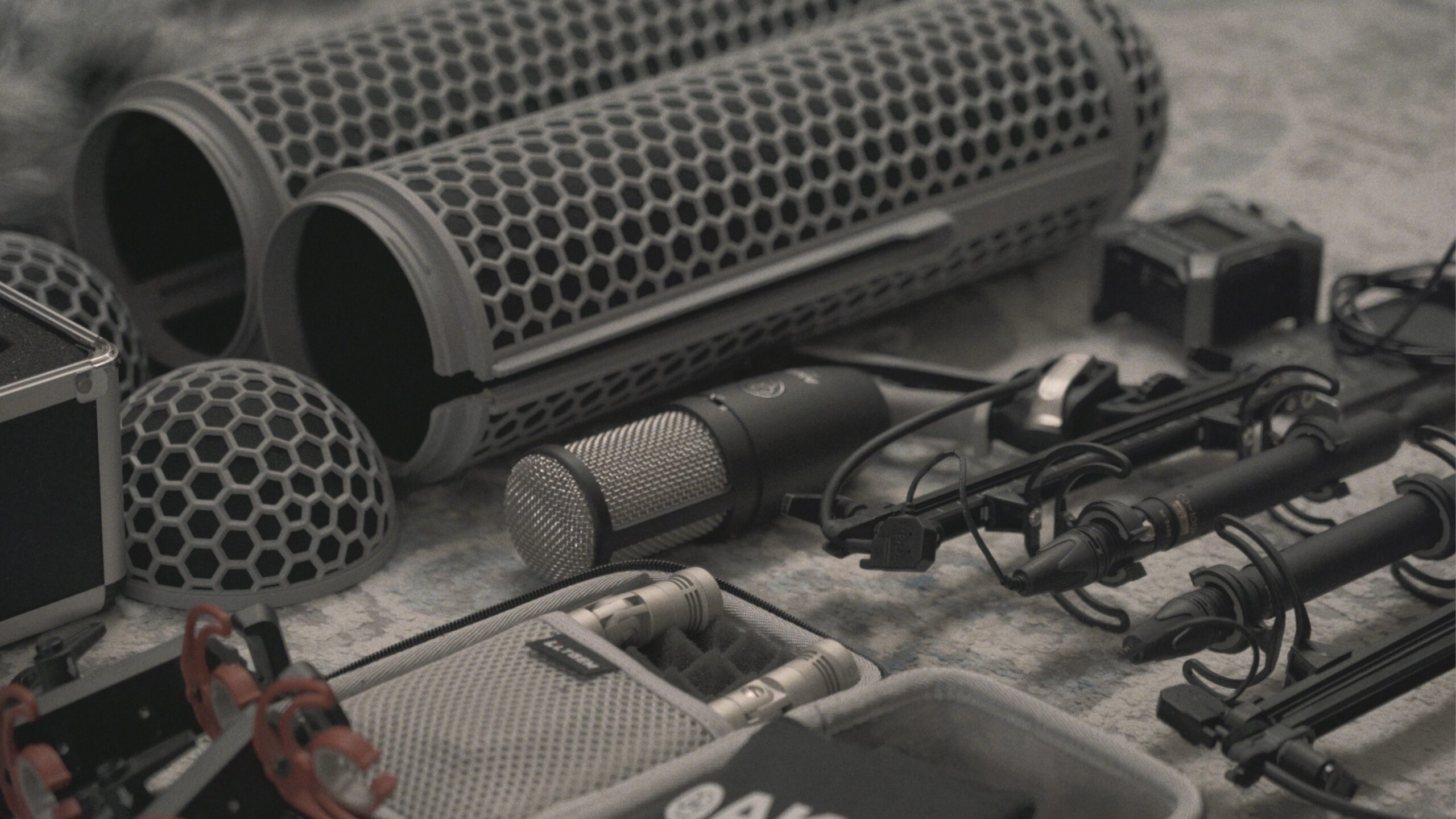
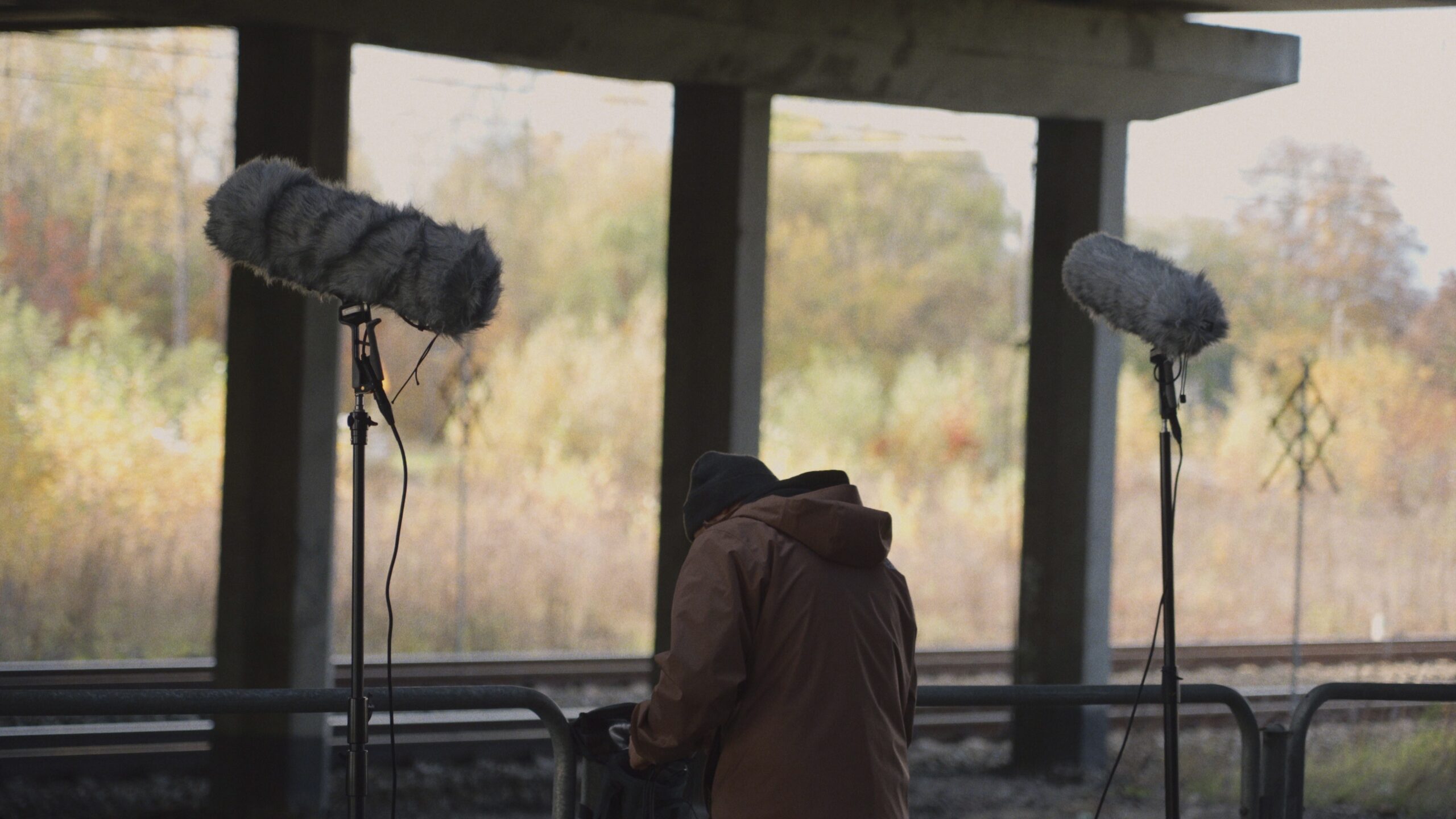
Experimenting with different microphones during the sessions themselves, Thephonoloop chose carefully, complementing the character of each instrument and the textures it wanted to capture. Indeed, it even deployed a pair of ultrasonic microphones capable of recording frequencies up to 100 kHz, producing results with exceptional detail. Much material was captured at 192 kHz, in fact, allowing the recordings to be significantly slowed down, readily revealing layers of resonance and texture that would otherwise have remained unheard.
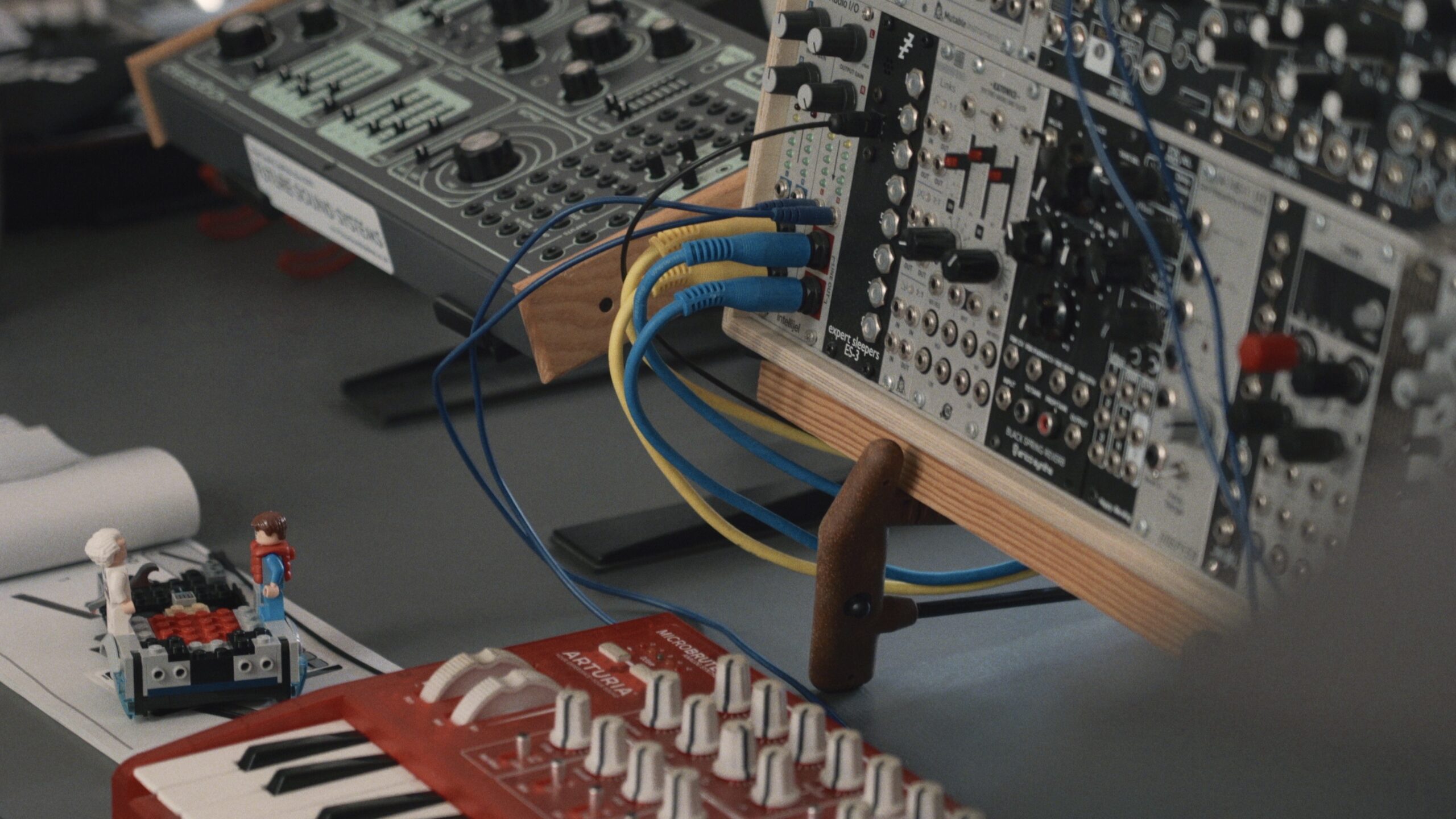
Working with modular systems is a natural part of Thephonoloop’s production process, so bringing them into the creation of outlines was inevitable. After all, processing and resampling sound has long been part of its sonic language, adding another layer that complements and contrasts with the raw acoustic recordings.
Recording a separate set of acoustic material, these sounds — together with recordings of analogue and digital synthesisers — were mangled through delays, filters, granular processors, physical resonators, reverbs, and samplers. Since this process often pushed the material far beyond its original form, transforming it into evolving textures and tonal variations that sit somewhere between the source and something entirely new, every experiment helped shape outlines into what it became.
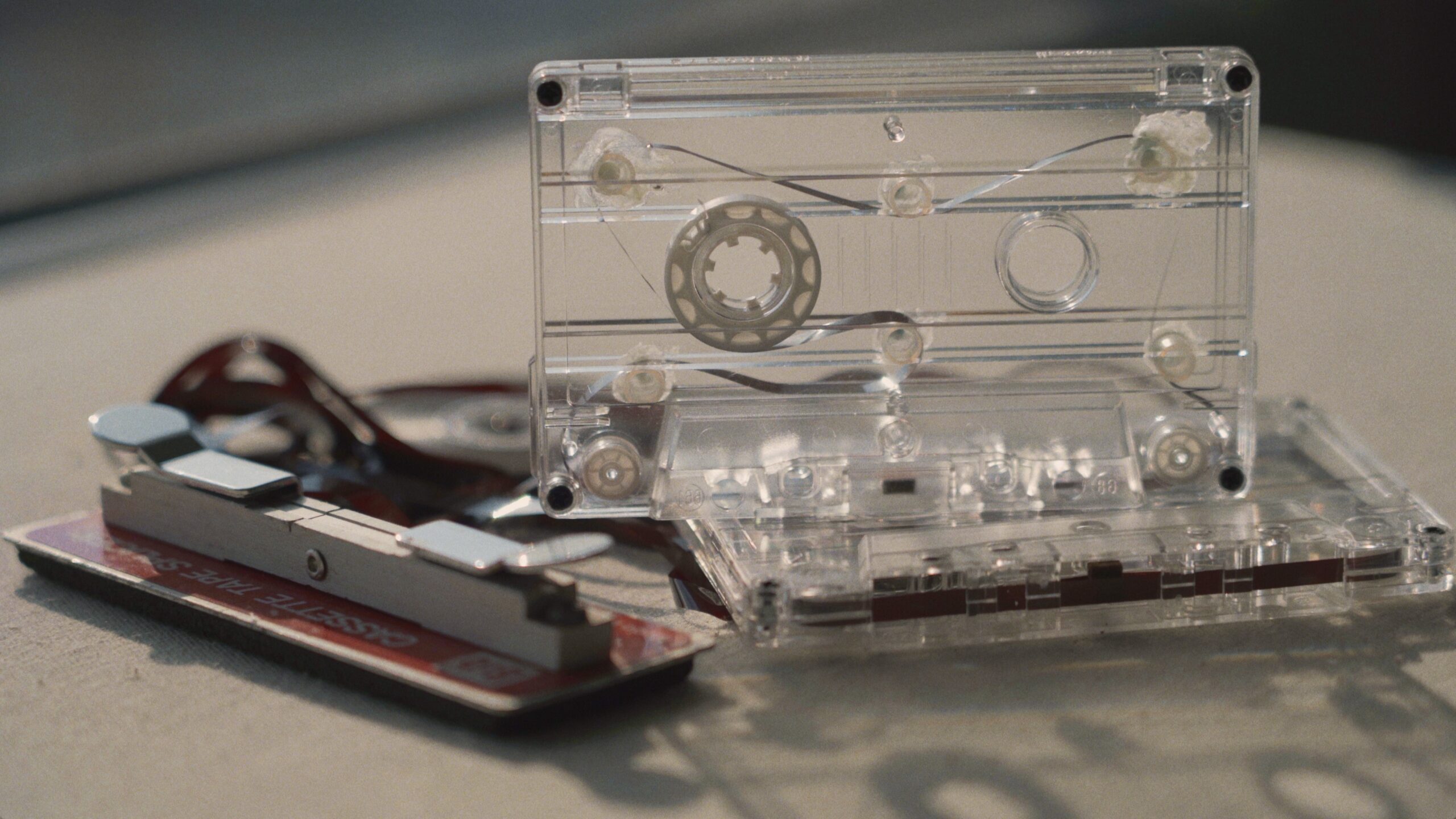
It is fair to say, though, that cassettes and tapes are another essential part of Thephonoloop’s DNA as one of the most inspiring ways to generate material that feels organic, slightly unpredictable, and full of subtle movement — often contrasting beautifully with the modular systems, raw recordings, and synthesisers. Working with real tape is something that Thephonoloop thoroughly enjoys doing — not only because of the sound it produces, but also because of the completely different workflow it invites. It demands attention and patience, but more often than not rewards that time with moments that are almost impossible to plan.
Put it this way: while all of those approaches are integral to outlines, ambience, noise, and subtle textures form another important layer of its palette, without which it would feel incomplete. It is just as well, then, that a large part of the recordings were captured with microphones capable of reaching far beyond the usual frequency range. Exploring environmental sounds and delicate textures, this extended spectrum revealed details and movement that would normally remain hidden. It is for this reason that — alongside traditional microphones — Thephonoloop also used contact microphones to capture vibrations directly from objects and surfaces. Such recordings often uncovered quiet movements, micro-textures, and small resonances, adding another layer of character and depth to the material.
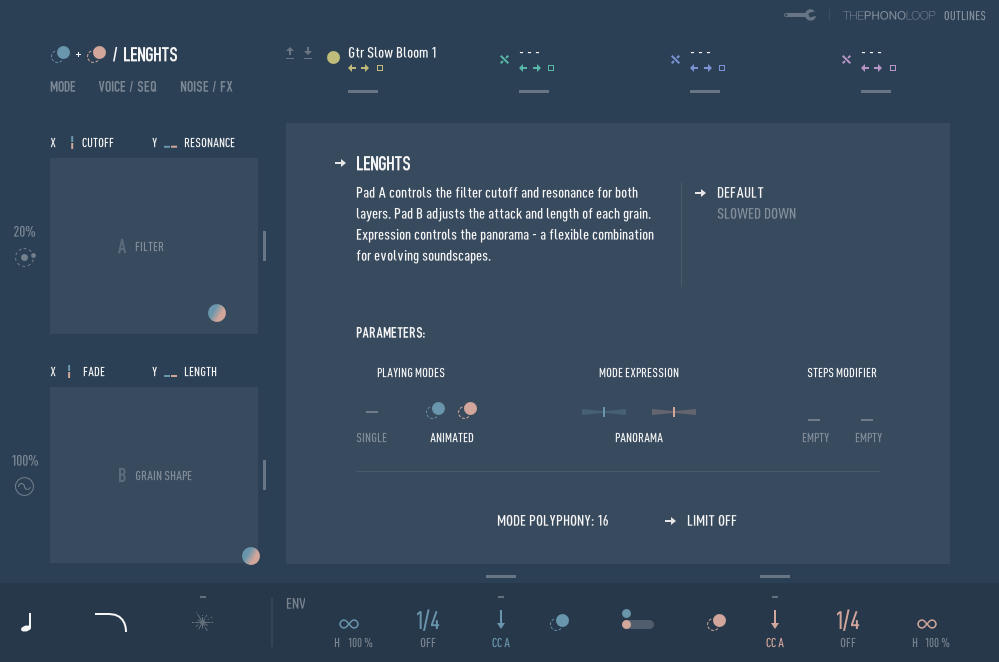
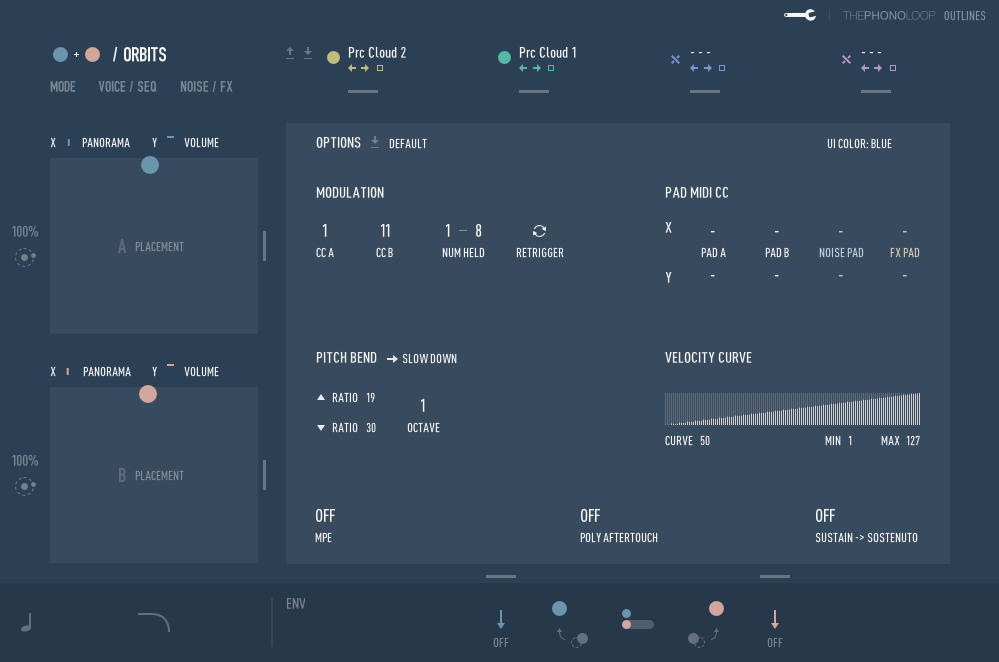
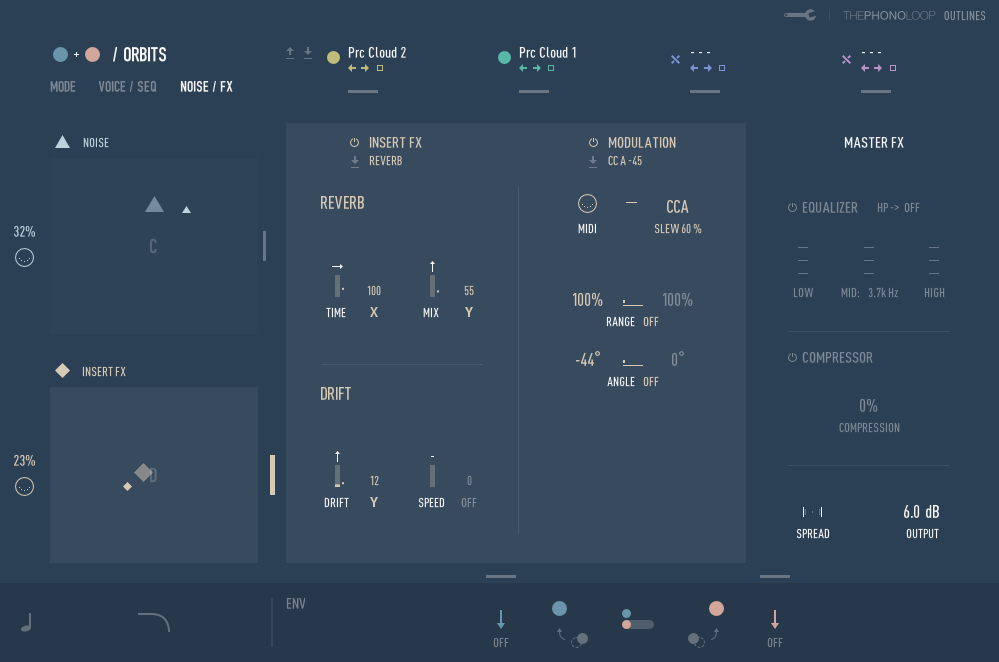
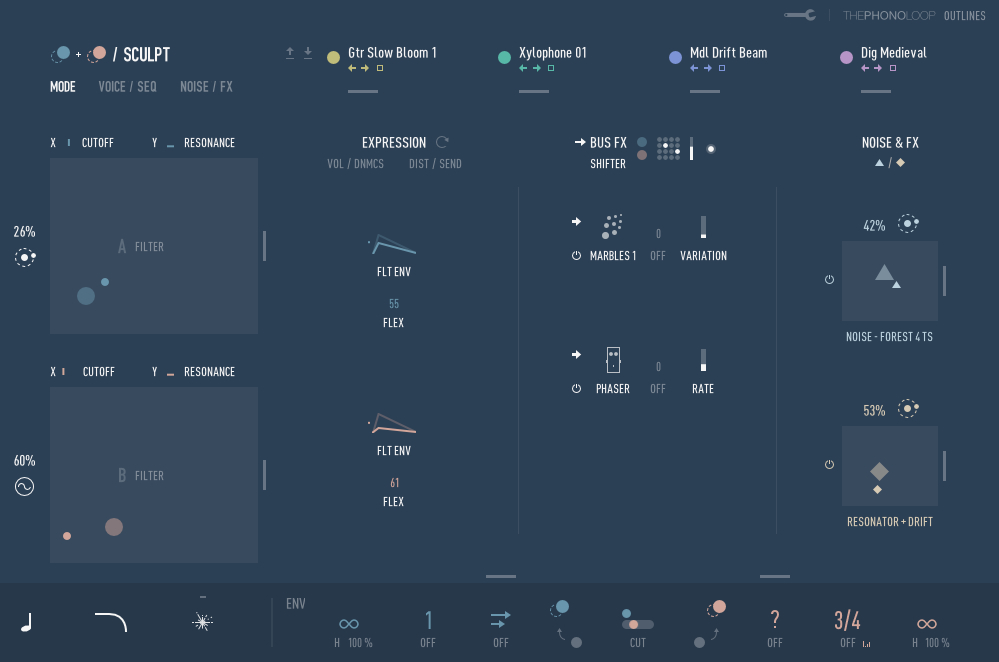
Sonically speaking, outlines’ engine is built around two independent granular layers, letting two different playback approaches — ANIMATED and SINGLE — run side by side. Since each layer runs on its own engine, it is possible to combine traditional polyphonic playback with granular or sequenced movement, meaning users can run two animated/granular layers, two polyphonic layers, or blend both approaches together. The layers can complement, contrast, or interact with each other, opening up a wide range of paths to explore. And as if all that was not enough to be getting on with, the engine also features a system of five different instrument modes — namely, DUETS, LENGTHS, ORBITS, SCULPT, and SINGULAR — that are designed to offer speedy starting points and keep the workflow intuitive while still encouraging deeper sound exploration.
Each layer features its own 16-step polyphonic sequencer (SEQ) — available in both playback modes — that can also function as a voice-specific modifier rather than only acting as a traditional step sequencer. Ultimately, users can reshape playback in many different ways — assigning different sample start positions per note, detuning parts of the sequence, reversing certain notes, shifting selected steps up an octave, and switching sound sources across notes, for example. Each sequencer can also store four independent patterns that can be modulated or switched in real time. This makes it easy to introduce evolving movement and variation during performance. Paired with the dual-layer engine, the sequencers can introduce more complex evolving patterns or subtle variations, spanning shifting granular textures to simple melodic gestures.
Getting to grips with outlines offers openly creative access to those beautifully blended raw acoustic gestures with modular-processed tonal experiments and tape loops that spark musical momentum, readily representing Thephonoloop’s approach to a collection of tonal variations designed to be combined and explored, each preset being an outline of a musical idea ready to be expanded and reshaped into something larger for anyone buying into it.
outlines is available to purchase at an introductory promo price of €90.00 EUR (excluding VAT), rising thereafter to its regular price of €120.00 EUR (excluding VAT), as an NKS (Native Kontrol Standard)-ready virtual instrument plug-in comprising 2,509 samples equating to a 7.81 GB download (after NCW — Native Instruments Comprised Wave — compression) with 438 presets for Native Instruments’ Kontakt Player 7.10.7 (or higher) — available for free from here: https://www.native-instruments.com/en/products/komplete/samplers/kontakt-8-player/ — on macOS 12, 13, 14, and 15 (latest update) and Windows 10 or 11 (latest Service Pack) directly from the dedicated product webpage here: https://thephonoloop.com/products/outlines
Watch Thephonoloop’s intriguing introductory video for outlines here: https://youtu.be/mty-Zy_ZInA
See and hear outlines in action while watching Thephonoloop’s presets play-through video here:
About Thephonoloop (www.thephonoloop.com)
Born out of a love for experimenting with sound design, Thephonoloop is a two-person team from Poland. Producing sample-based instruments with character, it is known for its expressive, noise-based creations with a focus on exploration, musicality, and sound design.
© 2026 Thephonoloop